7 Signs a Tree Needs to Be Removed (And When It Can Be Saved)
October 17, 2026
Knowing when a tree should be removed in our area takes more than spotting a dead branch. Learn which health and structural problems warrant a closer look.
Knowing how to spot the signs a tree needs to be removed is a lot easier before a questionable tree is tested by winter weather. NOAA’s Climate Prediction Center states that a strong El Niño is possible this fall and winter, which could lead to a few wetter months across Greensboro (like Fisher Park and Irving Park), Winston-Salem, and the Piedmont Triad. What that looks like locally, though, is never guaranteed.
A changing lean, significant decay, damaged roots, large dead branches, or a major crack won’t necessarily mean a tree must come down. Still, if a tree in your yard keeps drawing your attention, now’s a good time to determine whether it’s normal, manageable, or something more serious.
Key Takeaways
- Widespread decline, major structural damage, severe decay, or loss of stability can indicate a tree needs to be removed.
- New or worsening changes are often more concerning than defects that have remained stable for years.
- Construction damage and severe storms can weaken a tree even when the full extent of the damage isn’t immediately visible.
- Pruning, structural support, or monitoring may be possible when a tree can still remain safely in place.
What Are the Signs a Tree Needs to Be Removed?
A tree may need to be removed when its health or structure has declined to the point that pruning, support, or other care can no longer reasonably manage the problem. Some of the biggest warning signs show up in the canopy, trunk, and roots, while others are easier to recognize because something about the tree has recently changed.
Here are seven signs worth taking a closer look at.
1. The Tree Is Dead or Showing Widespread Decline
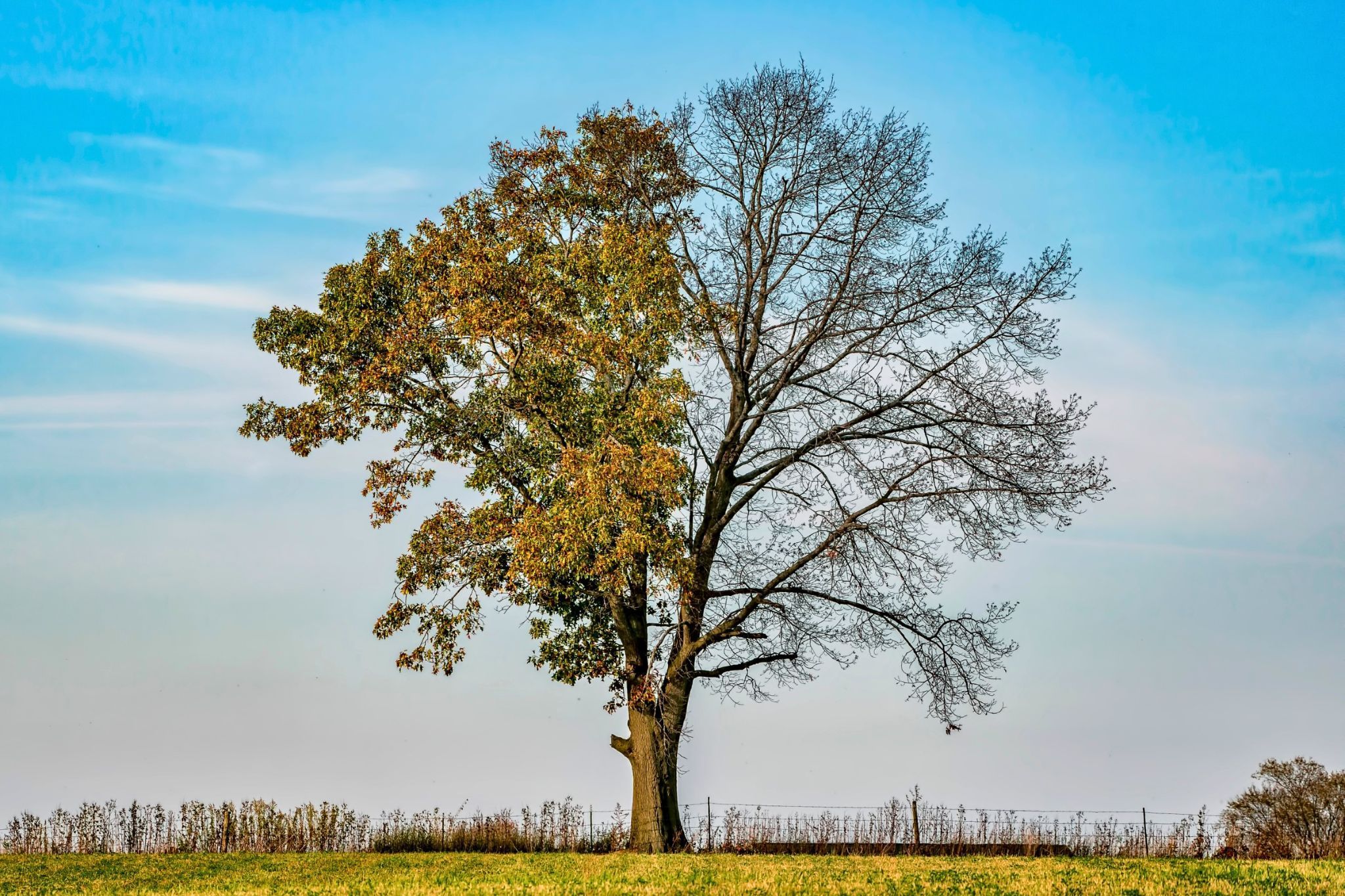
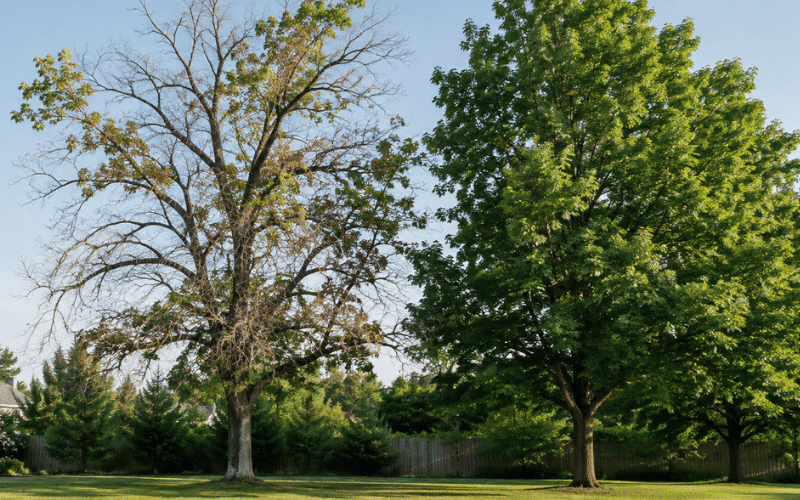
A tree may need to be removed when its overall health has declined significantly, and recovery is unlikely. Instead of focusing on one dead branch, look at the tree as a whole. A thinning canopy, poor leaf growth, large bare sections, or continued decline from one growing season to the next can point to a more widespread problem.
Not every struggling tree is beyond saving. Some causes of decline can be treated or managed, especially when they’re caught early. The concern increases when the decline affects a large portion of the tree, continues to progress, or the tree shows little sign of recovery.
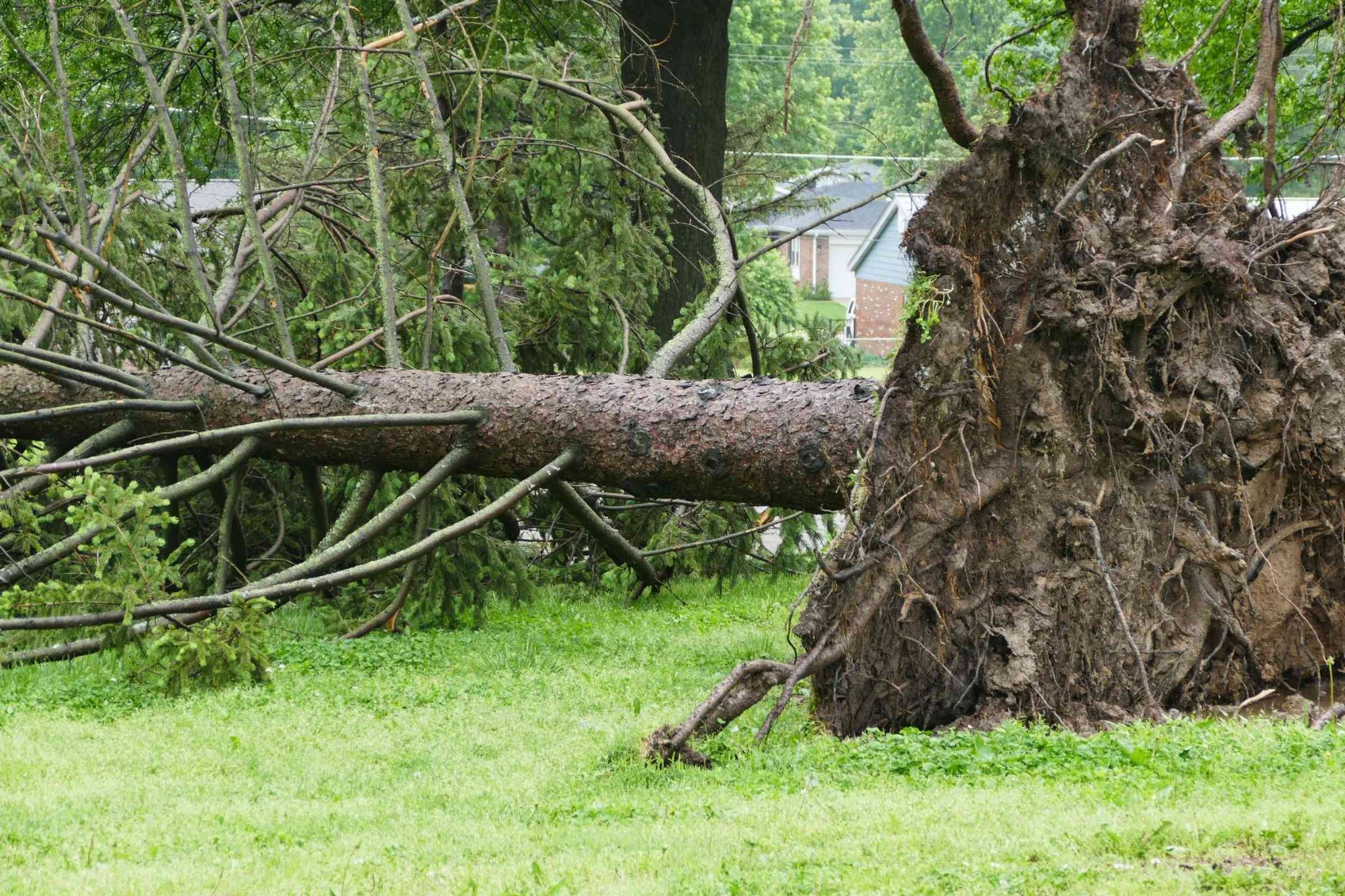
2. The Tree Has Developed a New or Worsening Lean
A lean is most concerning when it is new or getting worse, not when a tree has simply grown at an angle for years.
Look for soil that is cracking, lifting, or pulling away from the trunk, or roots that appear to be shifting out of the ground. These changes can indicate that the tree’s root system is losing its hold in the soil rather than the trunk just growing at an angle.
The lean itself is only part of the picture. An arborist will also consider root condition, changes in the surrounding soil, and what the tree could reach if it failed. A changing lean toward a home or other frequently used area deserves more immediate attention than a long-standing lean in an open part of the property.
3. There Are Large Cracks or Splits in the Trunk
Large cracks and splits are concerning when they affect the trunk or the connection between major stems or branches. Pay particular attention to cracks that extend into the wood, appear to be getting larger, or develop where two large sections of the tree meet.
Not every structural weakness looks like an obvious split. Included bark can develop where two trunks or large branches grow closely together, trapping bark between them instead of forming a stronger wood connection. These unions may also develop visible cracking or separation as the tree grows.
Whether the tree needs to be removed depends on the severity and location of the problem. A limited crack in an otherwise sound tree may be manageable, while a deep split or compromised major union can have a much bigger effect on the tree’s structural stability. ISA’s tree-risk resources explain how arborists consider structural defects along with the rest of the tree when evaluating risk.
4. There Is Significant Decay or a Large Cavity
Decay can develop inside a tree before there are obvious changes in the canopy. You may notice soft or rotten wood, a growing cavity, missing bark, or mushrooms around the trunk or base of the tree, all of which can point to decay beneath the surface.
How concerning that decay is depends largely on where it is and how much of the tree’s structure it affects. Decay in a smaller branch may be addressed with pruning, while decay in the main trunk, a major branch union, or near the roots can have a greater impact on the tree’s stability. NC State Extension notes that some wood-decay fungi affect the base and roots, and internal decay isn’t always easy to see from the outside.
Even a large cavity doesn’t automatically mean the tree needs to come down. An arborist can evaluate how much sound wood remains and whether the tree still has enough structural strength to remain safe.
5. Construction or Property Changes Have Damaged the Tree
Construction doesn’t have to hit the trunk to cause serious damage to a tree. Trenching, excavation, grading, heavy equipment, and adding or removing soil can disturb or damage the root system, including roots the tree relies on for support.
The effects may not show up right away, which can make the connection easy to miss. A tree may begin declining or show signs of instability months or even years after a driveway, addition, utility line, patio, or other project disturbed the surrounding soil. If problems appear after work was completed near the tree, that history can be an important clue to what’s happening now.
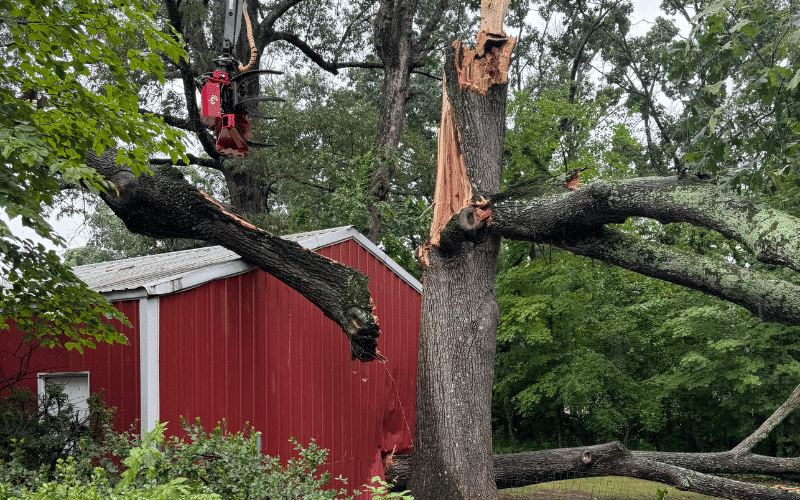
6. The Tree Has Severe Storm Damage
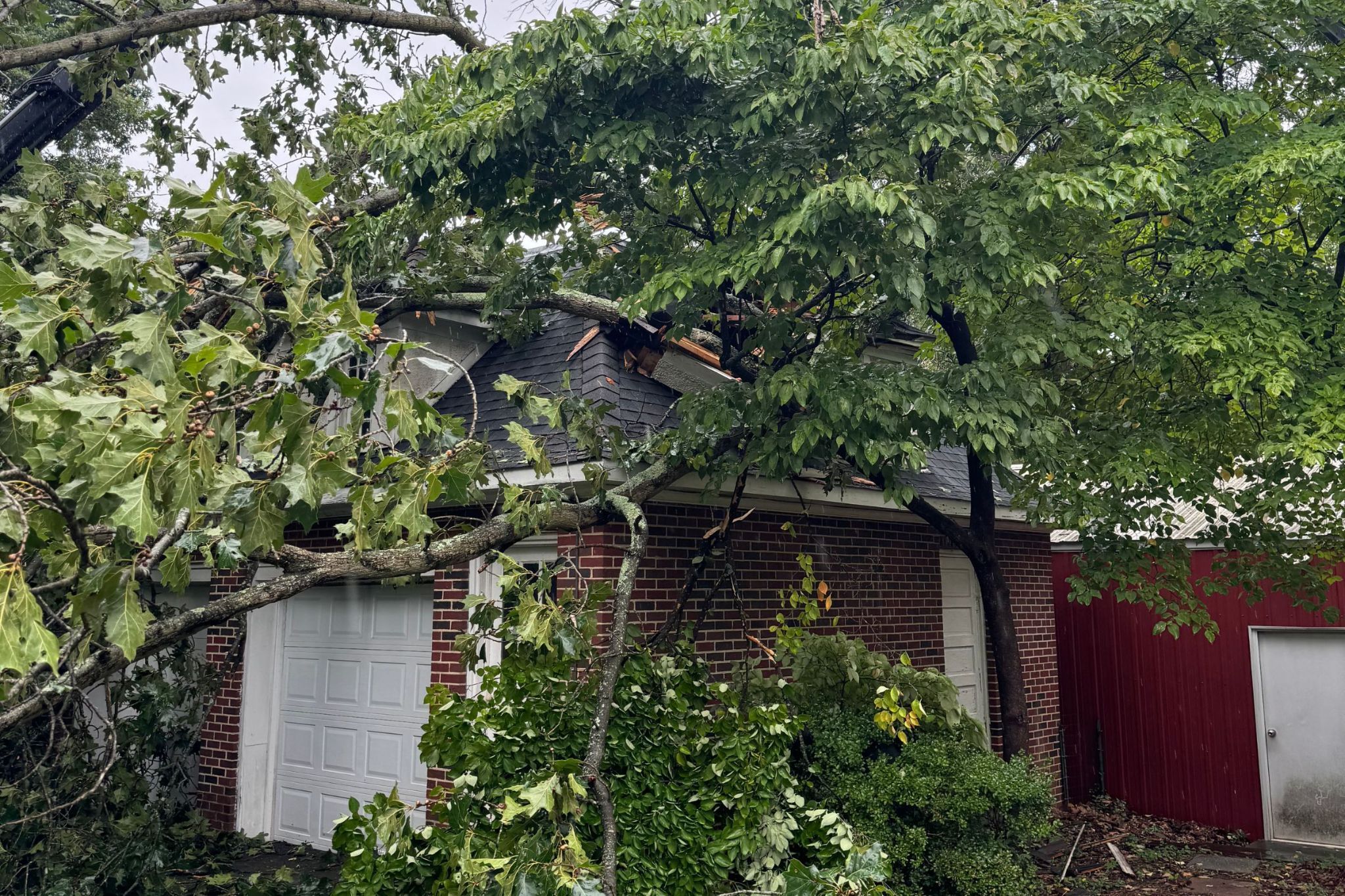
Some trees recover well after a storm, while others are left with too much structural damage to preserve reasonably. High winds, heavy rain, and being struck by lightning can cause sudden damage, including broken major limbs, split trunks, or significant canopy loss.
Losing a few smaller branches is very different from a major stem breaking away or a large portion of the canopy being torn out. If you can address the damage with pruning while leaving a healthy, balanced tree, removal may not be necessary. When major structural parts have failed or saving the tree would require removing a significant portion of what’s left, removal becomes more likely.
Storm damage can also create an immediate hazard when broken limbs remain suspended in the canopy or part of the tree has already begun to fail. Those situations may require emergency tree service rather than waiting for a routine assessment.
7. The Tree Poses a Risk to People or Property
A tree with a serious structural problem becomes more concerning when it could fall on your home, driveway, vehicle, play area, or another frequently used space. The same defect in a tree far from people and structures may not carry the same level of risk.
This doesn’t mean you should remove every tree close to your house. But when a tree has significant decay, a major crack, poor stability, or another serious defect, and something is in its path if it fails, removal may be the safest way to address the risk.
How Urgent Are the Signs You’re Seeing?
Most warning signs call for an assessment rather than an emergency response. The biggest reason to move faster is when something has recently changed, part of the tree has already failed, or people and property could be affected.
Call Now
Call when a tree or major limb has partially failed, a lean is changing rapidly, storm damage has affected the tree’s stability, or a large hanging limb is over a home or frequently used area. A tree or limb that has already fallen onto a structure also belongs in this category.
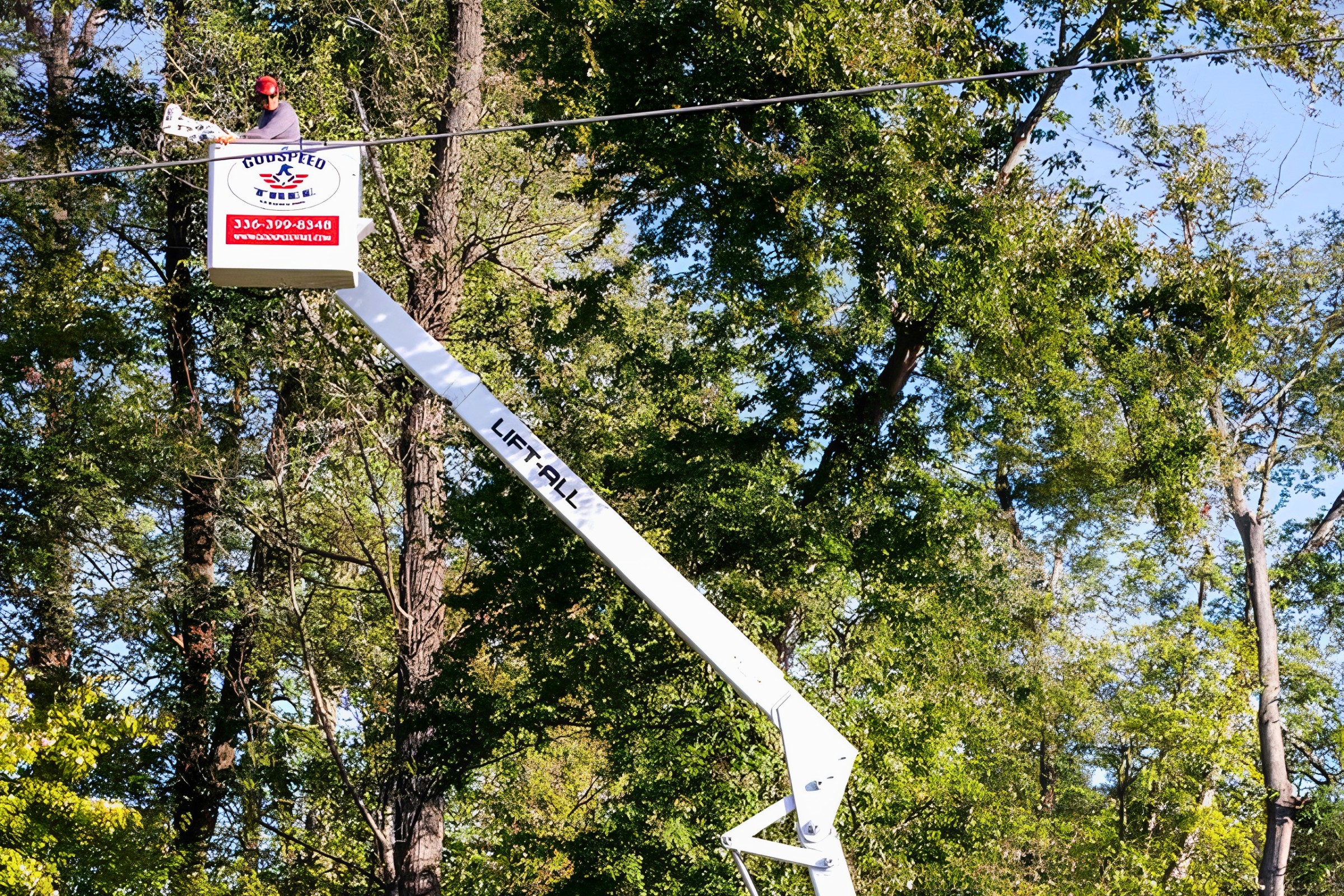
If power lines are involved, never approach downed or damaged lines. Stay back and contact the utility company. Godspeed provides 24-hour emergency service for fallen, hazardous, and storm-damaged trees.
Schedule an Assessment Soon
If you’ve noticed one of the warning signs above but nothing has actively failed, schedule an assessment rather than waiting for the problem to become more severe.
This is especially important when the condition is new, appears to be changing, or affects a major structural part of the tree. Dated photos can help you track changes over time, but they don’t replace an on-site assessment when there’s a structural concern.
Have It Checked If You’re Not Sure
Not every tree problem is easy to recognize. If something looks different but you can’t tell whether it’s normal or a sign of a bigger problem, it’s worth having the tree checked.
A professional tree hazard assessment can determine whether there’s a safety concern and, if so, what needs to be done.
Does One Warning Sign Mean the Tree Has to Come Down?
No. A visible defect is a reason to evaluate a tree, not automatically remove it.
The signs above don’t exist in isolation. An arborist looks at how severe the problem is, where it’s located, whether it’s stable or changing, and what the rest of the tree looks like. A cavity in an otherwise stable tree is a different situation from a cavity accompanied by widespread decay, root problems, and a changing lean.
The same is true of deadwood, cracks, and other defects. The question isn’t only “Is there a problem?” It’s also “How much does this problem affect the health or structure of the tree, and can it be reasonably managed?”
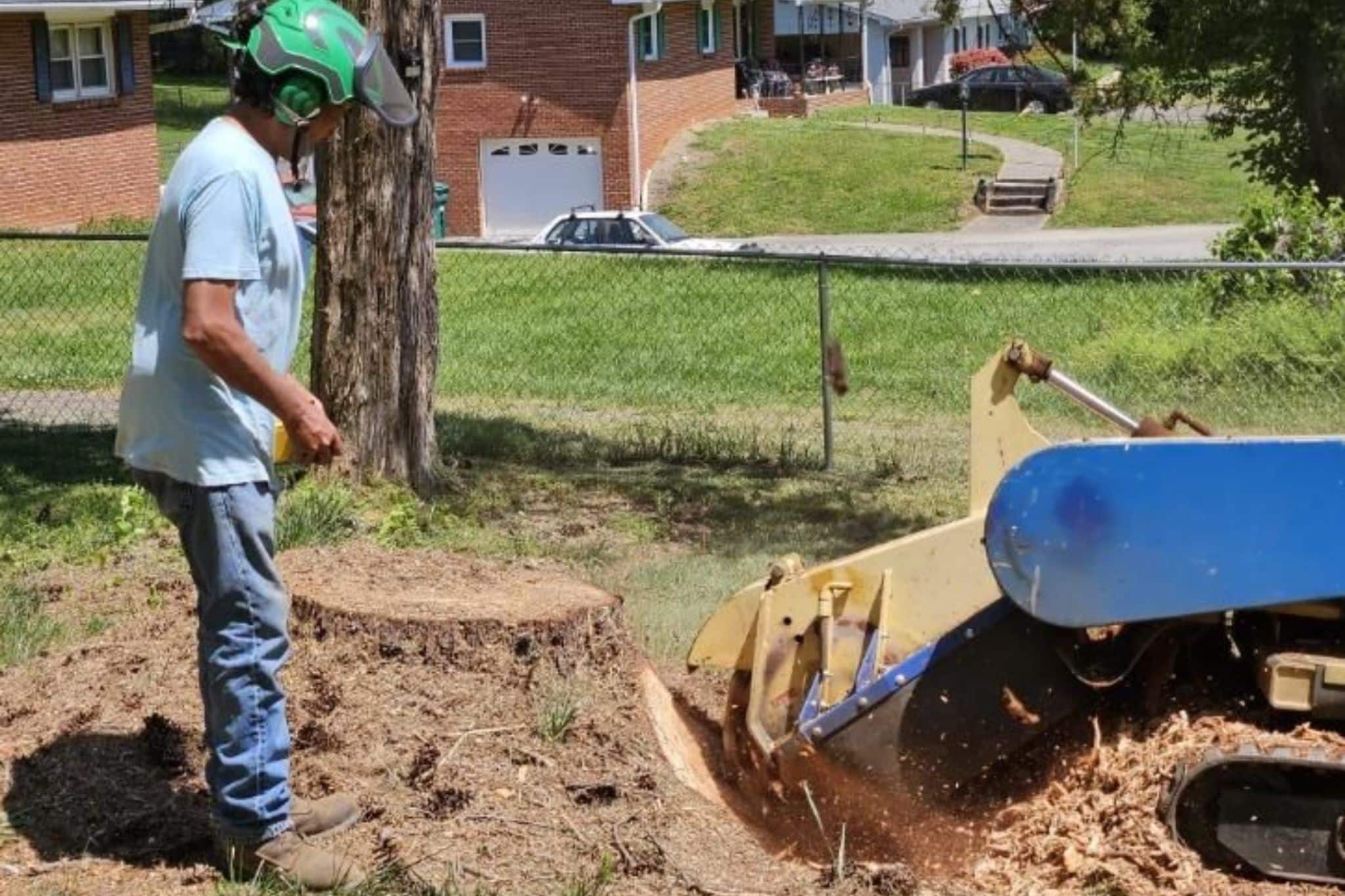
That’s why two trees that look like they have the same warning sign from the ground can end up with very different recommendations. If you’re trying to decide between keeping a damaged tree and taking it down, Godspeed’s guide to tree pruning vs. removal explains more about what goes into that decision. If all signs point to removal, you can add stump grinding as an add-on to the job, to get rid of things completely.
Can a Tree Be Saved Instead of Removed?
Yes, depending on what’s wrong with it. Recognizing a sign that a tree may need to be removed doesn’t necessarily mean removal is your only option. Some problems can be corrected, while others can be managed well enough for the tree to remain.
Depending on the problem, your options may include:
- Pruning: Dead, damaged, or problematic branches may be removed without sacrificing the rest of the tree. Godspeed’s tree pruning services include crown cleaning to remove broken, diseased, or dying limbs.
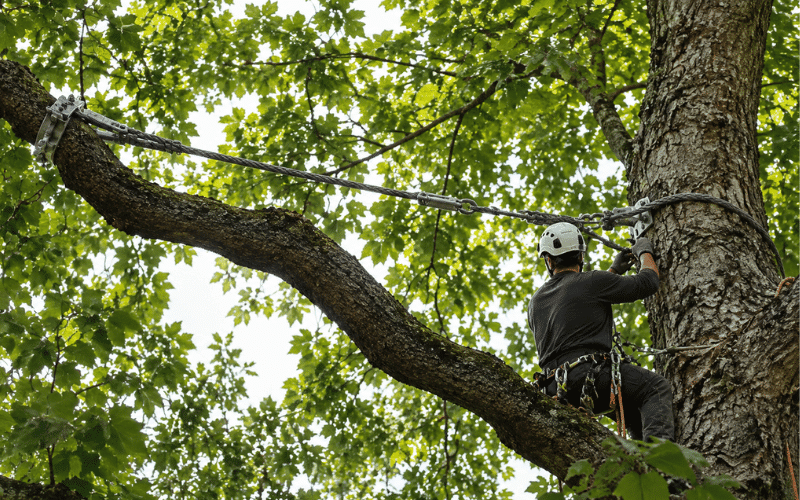
- Cabling or Bracing: Certain structural weaknesses may be supported to reduce stress and help stabilize the affected part of the tree.
- Monitoring: Some defects are stable enough to monitor for changes rather than act immediately.
- Removal: When a tree is dead, severely damaged, or the problem can’t be managed well enough for it to remain safe, removal may be the best option.
The line between saving a tree and taking it down isn’t always obvious. Godspeed’s guide to tree pruning vs. removal explains when each option may make sense.
Frequently Asked Questions About Removing Hazardous Trees
Is it safe to park or let kids play under a questionable tree?
Generally not. If you aren’t sure about the integrity or safety of a tree, you should keep all people, pets, and vehicles away from it until it’s assessed by a professional.
How quickly can a declining tree become dangerous?
There isn’t a set timeline. Some problems remain relatively stable for years, while others can worsen quickly, especially after damage or a major change in the tree’s condition. A noticeable change in a short period of time is generally more concerning than a condition that has remained unchanged for years.
Does early leaf drop mean a tree is dying?
Not automatically, no. That said, it is a sign that the tree is stressed or responding to its environment, which is enough reason to have the tree assessed by a trained eye.
Can a tree recover after losing a large part of its canopy?
Sometimes, but it depends on how much canopy was lost, why it was lost, and the condition of the remaining tree. A tree that loses several branches during pruning is a different situation from one that loses a major portion of its canopy during a storm or because of ongoing decline.
Can you tell if a tree needs to be removed just by looking at it?
Sometimes the need for removal is obvious, such as when a tree is completely dead or has suffered major structural failure. Other problems aren’t as easy to judge from the ground. Internal decay, root damage, and the severity of structural defects may require a closer assessment before anyone can say whether the tree should be removed.
Get Expert Tree Removal Guidance from Godspeed Tree Service
Some tree problems look worse from the ground than they are, and others are more serious than they appear, so the only way to know what you’re dealing with is to have the tree properly evaluated.
When a tree reaches the point where it can no longer remain safe, we’ll help you understand the concerns and what to expect during removal. S chedule an assessment with Godspeed Tree service today.
Godspeed Tree Service
Owned and operated with high standards and consistent reliability by Bobby Gates, Godspeed Tree Service has earned the trust of the North Carolina Triad community over the course of more than 25 years in business. With a strong emphasis on safety, conscientious training, and accommodating the needs of each client, you can't go wrong by hiring Godspeed for any of your tree service needs!