Is My Tree Dead or Dying from Summer Heat?
July 15, 2026
Can heat-stressed trees recover? Learn the difference between temporary stress and permanent decline, when to call an arborist, and what to do now.
Late July in the Piedmont Triad often brings brown leaf edges, wilting branches, and premature leaf drop — and the worry they trigger. Is my tree dead or dying from this heat? Summer stress is common and often recoverable, but the real concern is structural safety.
Not every tree that looks stressed in summer is in serious trouble. Knowing how to tell the difference between temporary heat stress and permanent decline can help you decide whether to keep monitoring the tree or call an arborist before the damage gets worse.
Key Takeaways
- Heat stress is a survival response; many trees recover if action is taken within the first few weeks of visible symptoms.
- Permanent decline shows >25–30% canopy dieback, visible cambium death, or structural defects; these trees require professional inspection.
- A stressed tree can look terrible but be safe, or look acceptable while hiding internal damage — visual inspection alone cannot determine structural safety.
- When a stressed tree is near your home, an ISA Certified Arborist assessment is the only reliable way to determine whether it poses a hazard.
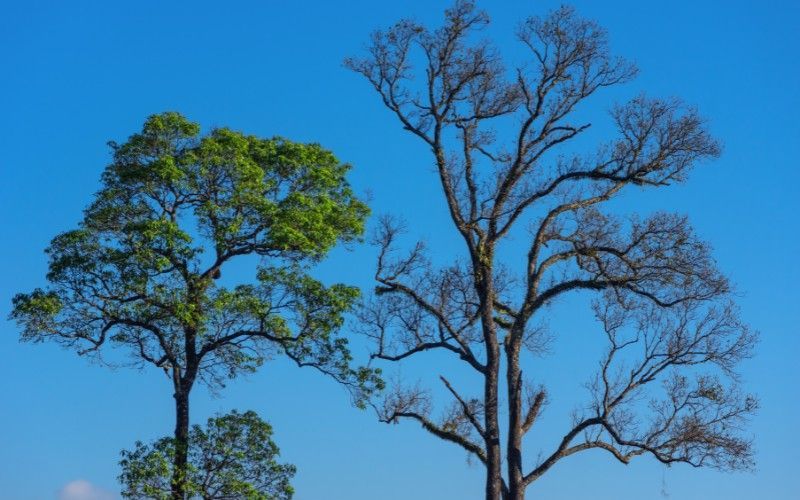
A healthy canopy compared to severe canopy dieback. Significant leaf loss and dead branches are warning signs that a tree needs professional evaluation.
Is Your Tree Actually Dying — or Just Stressed from the Heat?
Heat stress is a survival response, not failure. When temperatures soar and soil moisture drops, trees conserve water by shedding leaves and slowing growth. Many recover completely once water returns. Permanent decline is different — it’s irreversible damage where the tree’s internal systems are actually failing.
Severe stress, early decline, and seasonal dormancy look nearly identical to an untrained eye. A tree with 25% dead canopy could recover, or it could be entering permanent failure. A tree with scattered dead branches might rebound next year, or those dead areas might spread. Only a professional assessment can determine whether the tree’s living tissue (cambium) is still viable, detect internal decay, and identify structural defects that homeowner observation cannot.
What Does Summer Heat Stress Actually Look Like on a Tree?
Heat stress doesn’t affect every tree the same way. Some symptoms appear early and may improve with better growing conditions, while others indicate more serious decline. These warning signs can help you gauge how stressed your tree may be.
Early Warning Signs
- Wilting or drooping leaves, even on cool mornings
- Leaf edges browning or yellowing (leaf scorch)
- Leaves feeling dry and brittle to the touch, like dried paper
- Crunchy twigs that snap instead of bend
- Uneven canopy color change — patches of brown mixed with green, not uniform fall colors
Signs Stress Is Getting Worse
- Canopy thinning; interior leaves disappear first
- Summer branch drop, especially on oaks — trees shed branches to reduce water demand
- Dead twig tips and branch ends spreading outward
- Bark sloughing or peeling; layers separating from trunk
- Slight tree lean — possible sign of root damage or soil pulling away
When to Call an Arborist Immediately
- More than 25% of visibly dead canopy means urgent professional evaluation is needed
- Dead branches hanging overhead represent an immediate hazard
- Dead cambium identified through professional scratch testing
When Does Stress Become a Structural Risk?
Structural risk requires two things: (1) visible defects (cracks, splits, decay, pronounced lean, or hanging branches) and (2) proximity to targets (your home, vehicles, power lines, or property boundary).
Visual inspection catches obvious problems like a split trunk or a branch hanging at an odd angle. It misses the internal damage that matters most, including decay inside the trunk, root separation from the soil, and weakness where major branches join. A tree can look acceptable from 20 feet away and still harbor catastrophic internal failure.
Structural assessment uses multiple methods, including:
- Visual inspection following ISA standards, examining crown density, branch condition, trunk integrity, bark health, soil conditions, and root collar health.
- Cambium viability testing with specialized tools, measuring wood moisture and density to detect internal decay without drilling.
- Soil resistance profiling, measuring wood structural integrity when decay is suspected.
Together, these methods provide a risk rating that homeowner observation cannot supply and helps to determine if a tree should be removed.
When a stressed tree is structurally compromised but valuable, Cobra cabling can extend the tree’s life by 10 to 15 years by supporting weak branches or co-dominant trunks, providing an alternative to removal.
Why an ISA Certified Arborist Matters: The International Society of Arboriculture certification requires extensive knowledge of tree biology, pruning standards, safety practices, and tree risk assessment. Godspeed’s ISA Certified Arborists evaluate trees using industry-recognized standards, giving you a professional assessment based on proven methods — not guesswork.
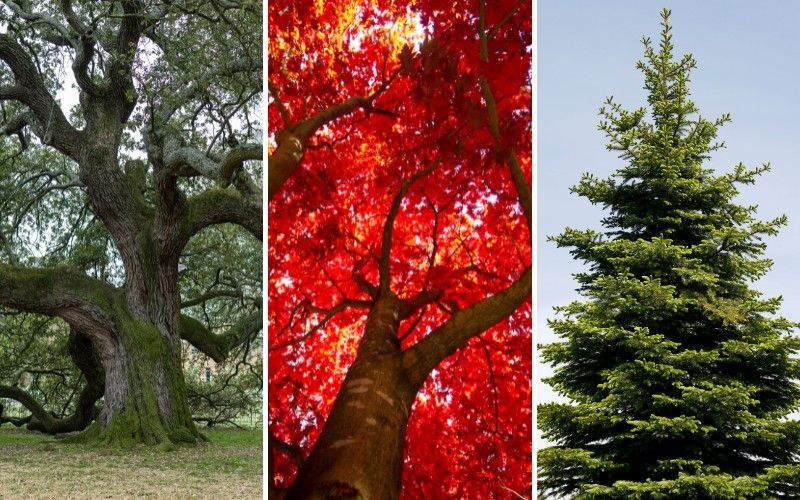
Oaks, maples, and pines are among the most common trees in the Forsyth County area, but each has different water needs and responds differently to prolonged summer heat and drought.
Which Trees in the Forsyth County Area Are Most Vulnerable to Summer Stress?
Piedmont Triad summers are hot and often dry, and drought can significantly stress trees. Native and common landscape species have different water needs and drought tolerance, making some more vulnerable than others.
Species at Higher Risk
- Oaks: Red oaks, water oaks, and white oaks are abundant in Lewisville, Reynolda, and Clemmons. Mature trees were often planted in soil that has since been compacted, limiting root access to deep water. Oaks may shed large branches during periods of severe heat and drought, a phenomenon known as summer branch drop. While dramatic, it usually isn’t fatal to the tree.
- Maples: Sugar maples and red maples prefer consistent moisture and struggle during drought. They show early stress signs (yellowing, wilting) because shallow root systems can’t access deep soil water.
- Pines: Loblolly and shortleaf pines, native to the Piedmont, are generally hardy but can show stress in extreme drought years. Newly planted pines are more vulnerable than established ones.
Why These Trees Struggle in Our Area
Summer heat alone isn’t usually what damages trees. It’s the combination of prolonged heat, limited soil moisture, and site conditions that makes recovery difficult. Across the Piedmont Triad, several factors increase the risk of summer stress.
- Compacted Soils Restrict Root Growth: Many mature trees in Lewisville, Reynolda, and Clemmons were planted decades ago before neighborhoods were fully developed. Over time, construction, driveways, patios, and foot traffic have compacted the soil, making it harder for roots to grow deep enough to reach reliable moisture.
- Clay Soils Don’t Absorb Water Easily: Piedmont clay sheds water during heavy rain and dries out quickly during hot weather. Instead of soaking deep into the root zone, much of the rainfall runs off or evaporates before trees can benefit from it.
- Established Landscapes Compete for Water: Mature neighborhoods often have multiple large trees sharing the same limited soil moisture. During extended dry periods, that competition can leave even healthy trees under stress.
- Young Trees Haven’t Established Deep Roots: Trees planted within the last two to five years rely on regular watering because their root systems haven’t expanded into the surrounding soil. They’re often the first to show signs of heat and drought stress.
What Should You Do If You Think Your Tree Is in Decline?
Get professional eyes on the problem within 1–2 weeks of noticing escalating symptoms.
Do NOT:
- Attempt DIY cambium testing. Results are unreliable and can introduce disease.
- Prune a stressed tree. Water loss through cuts worsens stress and opens disease entry wounds.
- Fertilize. Fertilization stimulates growth the tree cannot support.
- Assume it will bounce back on its own. Early intervention dramatically improves outcomes.
Do:
- Monitor closely. Track whether leaf drop is stabilizing or spreading.
- Schedule a professional risk assessment, specifically a structural hazard evaluation, not routine tree care.
- Mention location and symptoms when calling — it is considered urgent if the tree is near your home, touching power lines, or has structural defects.
- Get an assessment in writing because documentation protects you for insurance claims.
What a Professional Assessment Includes
A thorough evaluation gives you information you cannot get any other way:
- Visual inspection of crown density, branch condition, trunk integrity, bark health, soil conditions
- Root collar examination — looking for girdling roots, decay, or root separation
- Professional diagnostic tools detect internal decay that’s invisible from ground level
- Structural risk rating — a professional determination of whether the tree poses a hazard
- Written recommendations with a timeline for next steps — whether that’s monitoring and rechecking in 90 days, installing cabling to extend the tree’s life, pruning to reduce weight and stress, or removal to prevent failure.
Frequently Asked Questions About Summer Tree Stress
How long can I wait before deciding about removal?
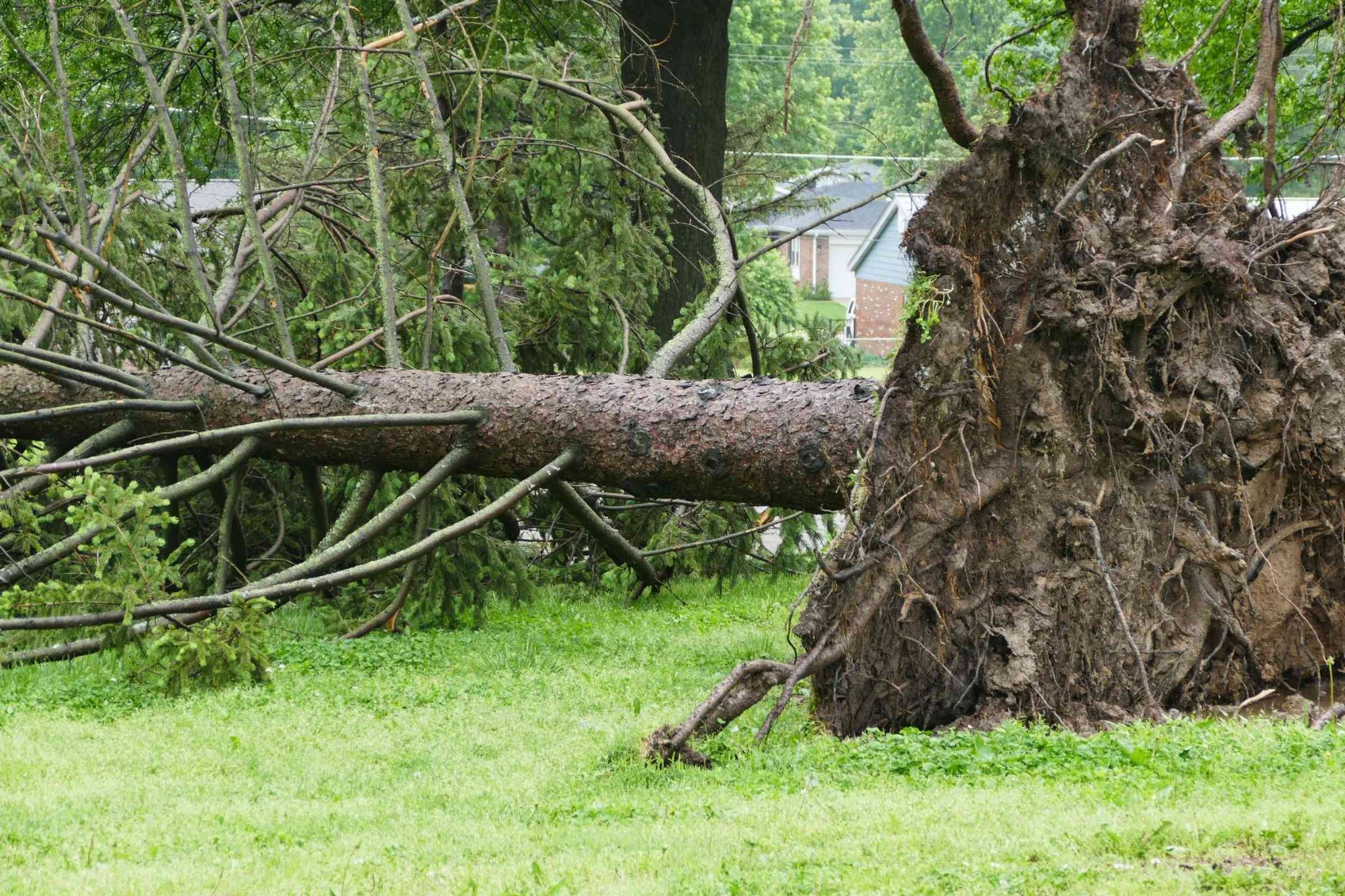
If your arborist rates the tree as a high-risk hazard, removal should happen before the next major storm arrives. Moderate-risk trees typically give you one to two seasons to plan and budget for removal. However, early decisions are almost always more cost-effective than emergency removal after failure, which often involves damage cleanup and repair.
If a tree is mostly dead, can cabling save it?
No. Cabling addresses structural weakness in wood, not tree health. A dying tree cannot be saved by physical support because the problem is internal failure, not mechanical. Cobra cabling works only for trees that are otherwise healthy or stressed but not declining, with specific structural defects like split trunks or weak branch unions. Your arborist will tell you whether cabling is viable or whether removal is the responsible choice.
What happens if I do nothing and the tree fails?
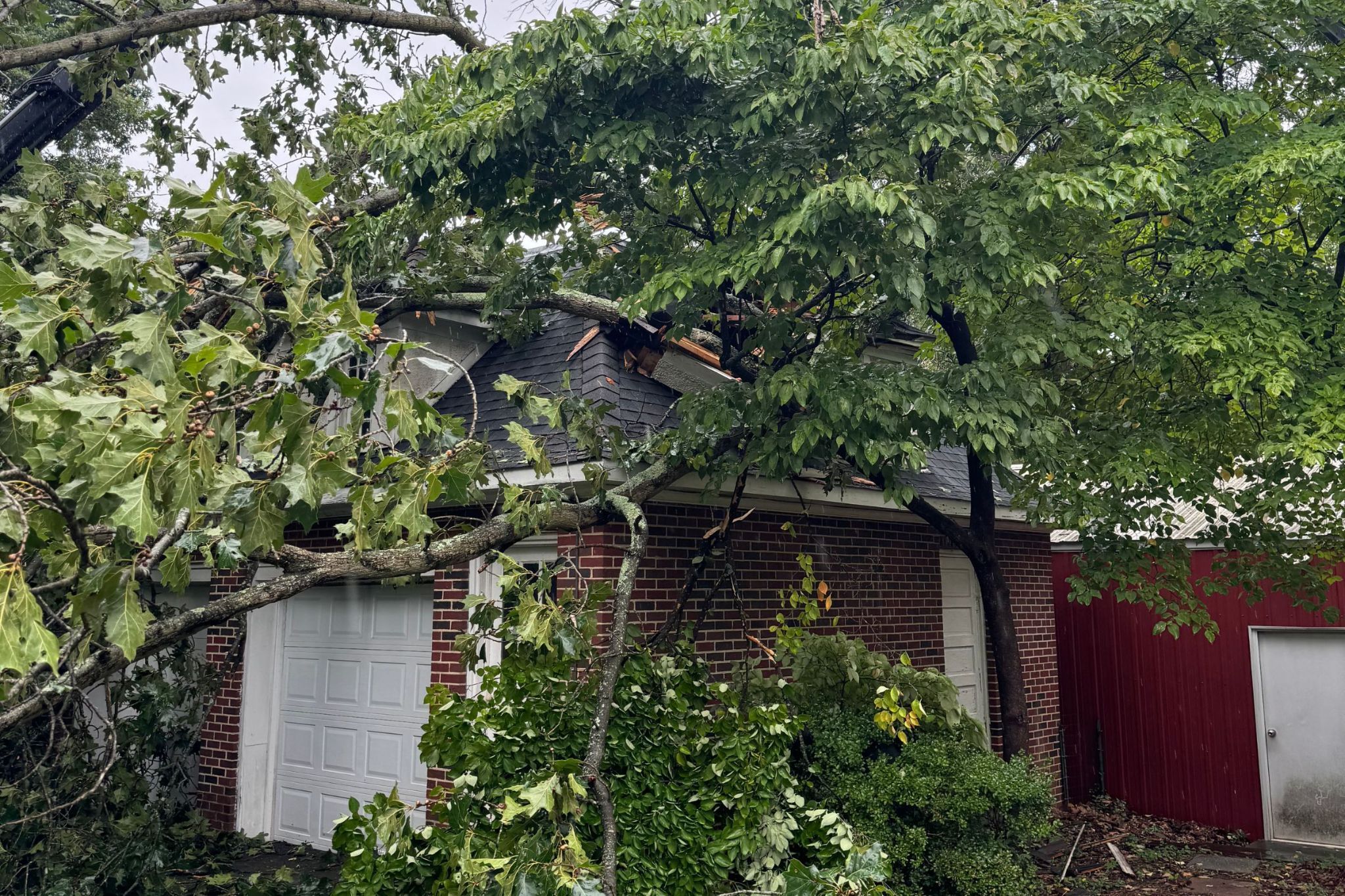
Homeowners’ insurance may not cover damage from a hazardous tree you knew about. Godspeed’s written documentation protects you by showing you took action once risk was identified.
Can deep watering save a heat-stressed tree?
Deep watering helps a stressed tree (15–20 gallons per week, once weekly). But if the tree shows >25% canopy dieback or structural damage, watering alone won’t save it. An assessment determines whether recovery is possible.
Will my neighbors’ trees get sick from my tree’s stress?
Heat stress isn’t contagious. But if decline is due to pest or disease, professional diagnosis ensures you don’t unknowingly spread problems to neighbors. That’s another reason an arborist assessment is critical.
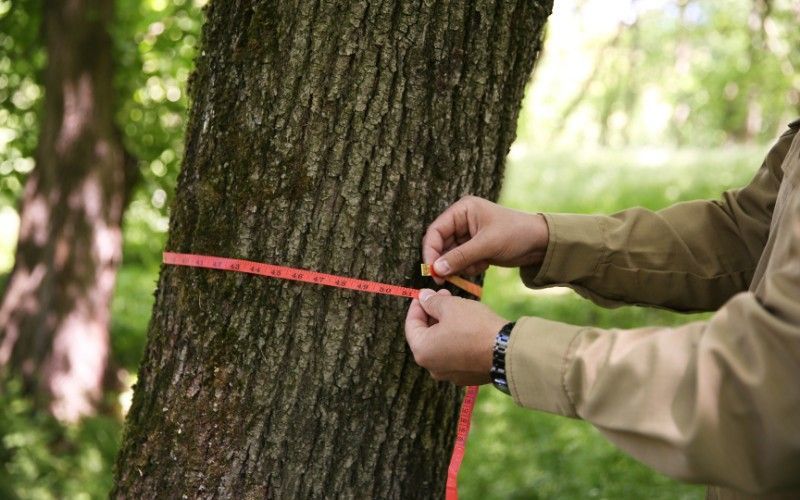
A professional tree assessment evaluates more than visible symptoms. Arborists inspect tree size, structure, and overall condition to determine whether a stressed tree can recover safely.
Protect Your Property — Schedule Your Tree Assessment Today
Summer stress is common and often recoverable. But stressed trees hiding internal damage or structural weakness pose real risk. Your job is to notice the problem early. Our job is to determine safety and next steps.
If your tree is leaning, dropping large branches, or showing signs of significant decline, don’t wait for the next storm. Godspeed Tree Service provides 24/7 emergency services for hazardous trees and fast professional assessments when safety is in question. Call us today at 336-448-3088 or to request a quote online.
Godspeed Tree Service
Owned and operated with high standards and consistent reliability by Bobby Gates, Godspeed Tree Service has earned the trust of the North Carolina Triad community over the course of more than 25 years in business. With a strong emphasis on safety, conscientious training, and accommodating the needs of each client, you can't go wrong by hiring Godspeed for any of your tree service needs!