What Experts Recommend to Help Prepare Your Trees for Storm Season
June 17, 2026
Learn how to prepare your trees for storm season. Expert guidance on structural pruning, cabling, and which tree problems cause failure during storms.
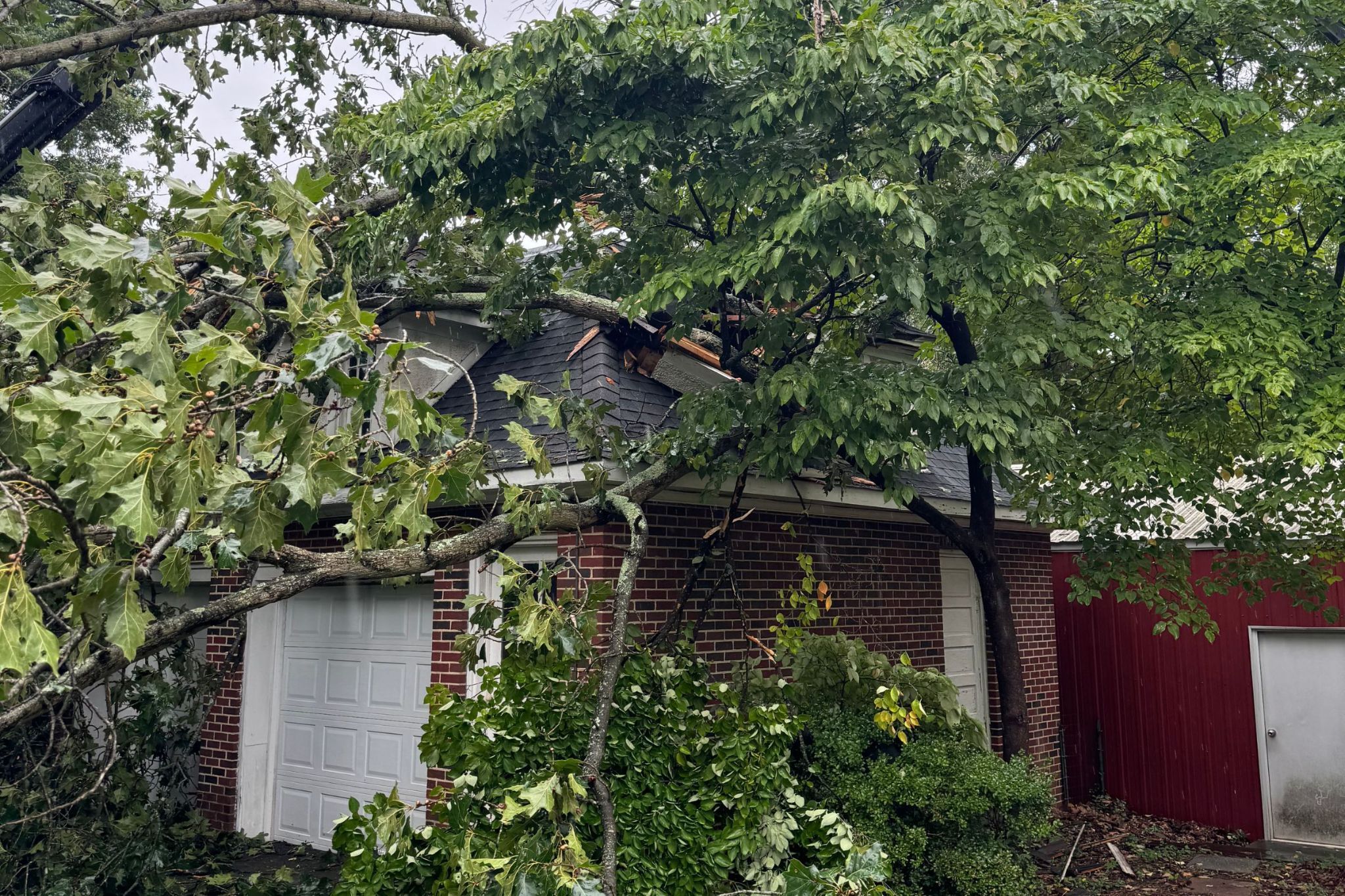
Summer storms don’t usually create tree problems—they expose the ones that were already there. Across the Piedmont Triad, severe weather activity increases during the summer months, and high winds, saturated soils, and intense thunderstorms can turn hidden structural defects into broken limbs, split trunks, uprooted trees, and costly property damage.
Many of the trees that fail during storms showed warning signs long before the weather arrived. Identifying and correcting those weaknesses ahead of time can significantly reduce the risk of damage when severe weather strikes.
Key Takeaways
- Co-dominant stems are the #1 structural failure point in windstorms and should be evaluated by an arborist before severe weather hits.
- Storm-proofing a tree is different from a routine spring trim—structural work targets specific defects that cause failure, not just aesthetics or clearance.
- Tree cabling systems, like Cobra, reduce failure risk for suitable candidates but don’t eliminate it; realistic expectations matter for long-term tree health and homeowner satisfaction.
- The ideal window for structural pruning is January through March, but deadwood removal and cabling installation can still happen into early July.

Trees with codominant stems often develop weak attachment points that can split under stress. Combined with shallow or compromised root systems, these structural defects significantly increase the risk of storm-related failure and uprooting.
What Tree Problems Cause the Most Storm Damage?
The trees that fall during high winds often fail at predictable weak points. Understanding these structural defects helps you recognize which trees on your property might be at risk.
Co-Dominant Stems and Included Bark
Co-dominant stems are two trunks of nearly equal diameter growing from the same point on the trunk. Where they meet, bark becomes trapped between them—creating included bark—a weak union with no interlocking wood fibers, unlike trees with a single strong leader.
As the tree grows and adds weight to both stems, stress on this union increases exponentially. During high winds, this union becomes the failure point. A falling co-dominant stem can damage homes, vehicles, or power lines—a real risk in crowded neighborhoods like Sherwood Forest and Washington Park in Winston-Salem, or across the Greensboro Triad.
Deadwood Loading and Weak Branch Attachments
Dead branches are brittle and shed first in high winds, creating unpredictable weight shifts that destabilize the rest of the canopy. Weak branch attachments—where branches join the trunk at sharp V-angles or with bark inclusions at the base—fail under even moderate gusts. When these fail, they trigger a cascade: as one limb falls, it destabilizes neighboring branches, which then fail in sequence. Together, deadwood and weak attachments create a domino effect that turns a manageable wind event into a dangerous one.
Root Plate Compromise in Piedmont Clay Soils
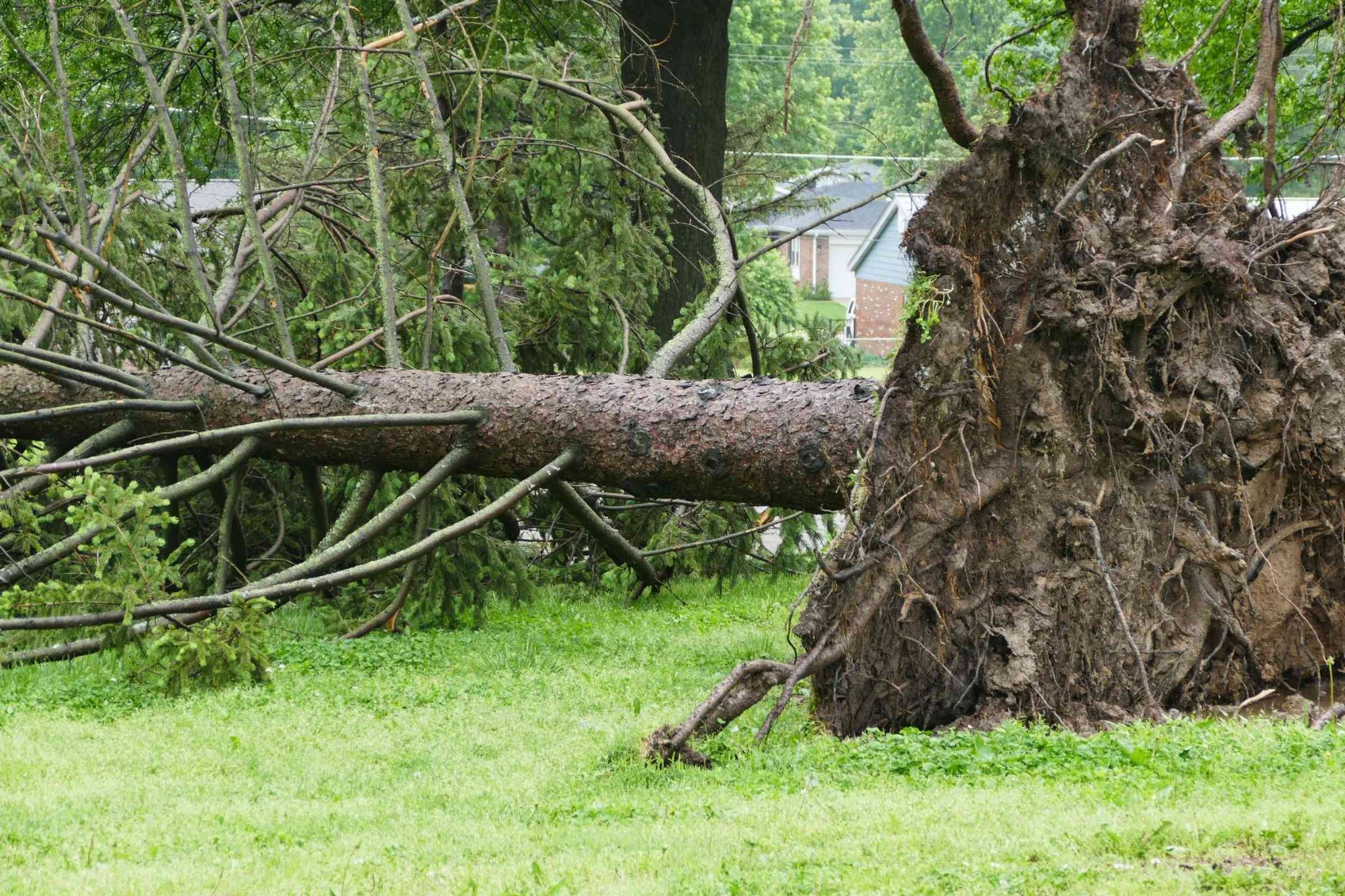
The Piedmont’s clay soils are a unique compounding factor. During heavy rain events, like the flooding that follows winter storms, clay becomes saturated and loses its grip on the root plate. A tree with a structurally sound canopy can still uproot at soil level if the root system loses anchorage, especially trees with shallow roots or age-related decline.
This is particularly relevant for homeowners whose trees experienced winter ice and snow followed by spring rains. Soil conditions may have already compromised the root system’s ability to hold during the next severe event. If you haven’t had a winter tree damage inspection after recent storms, now is a good time to assess what may have been compromised.
What’s the Difference Between Storm-Proofing a Tree and Regular Pruning?
Many homeowners assume a spring trim equals storm preparation. It doesn’t. Understanding the difference helps you invest in the right service.
A routine spring trim removes dead branches and maintains clearances—work a general landscaper performs annually. Structural pruning is diagnosis-driven. It targets co-dominant stems, weak attachments, and canopy weight imbalances that cause failure during high winds. The goal isn’t appearance; it’s wind resilience.
Each of these methods require different expertise. A general “spring trim” doesn’t assess structural defects. Our professional tree pruning and trimming services include the structural assessment and targeted interventions needed for storm preparation—work based on what’s actually wrong, not just what’s in season.
How Structural Pruning Reduces Storm Damage Risk
Not all pruning improves a tree’s ability to withstand severe weather. NC State Extension recommends targeted pruning of branches with weak attachments and co-dominant stems before storm season rather than general thinning or reactive pruning after damage has already occurred.
This structural pruning reduces stress on the parts of a tree most likely to fail during high winds. ISA research shows that reducing weight on defective stems decreases strain on weak unions, helping improve storm resistance and reduce the likelihood of failure.
Can Tree Cabling Actually Prevent Storm Damage?
This is the #1 question homeowners ask, and the honest answer is nuanced. Cabling reduces failure risk for the right candidates, but it doesn’t eliminate it.
How Cobra Dynamic Cabling Works
Cobra dynamic cabling is a polypropylene hollow rope installed in a dynamic system, meaning it includes a shock absorber that allows the tree crown to oscillate naturally during wind while dampening peak loads. Unlike rigid steel cable, which creates a “karate chop effect” (forcing shock directly to the weak point), Cobra absorbs and dissipates energy across the limb, reducing strain on the union.
The system is installed at roughly two-thirds of tree height for maximum leverage and is often combined with reduction pruning. Pruning addresses the structural weakness itself; the cable reduces strain on that weakness while it heals. This two-part approach—pruning plus cabling—is what actually improves outcomes.
When Cabling Saves Trees vs. When It Doesn’t
Cobra cabling works best for trees with co-dominant stems that have otherwise good structural integrity, a healthy canopy, and a sound root system. It’s an ideal preservation tool for high-value trees that homeowners want to keep.
Cabling is not suitable for trees that are already declining, have severe decay, are badly leaning, or have root system failure. In those cases, removal is the safer choice. This is why a professional arborist assessment matters. The wrong candidate will fail anyway, wasting time and money.
Cabling reduces stress on vulnerable limbs and stems, lowering the risk of failure during storms and other loading events. While it can significantly improve stability, no support system can guarantee a tree will never fail.
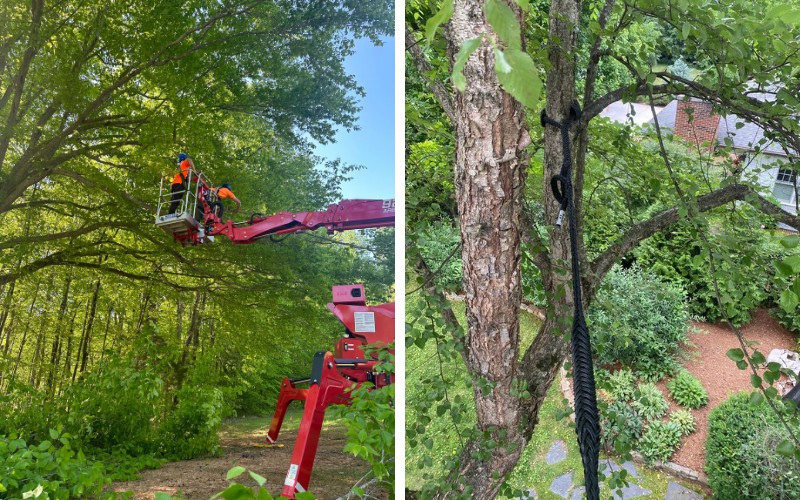
Deadwood pruning removes weak or hazardous branches, while cabling provides supplemental support to vulnerable limbs and codominant stems. Together, these proactive measures help reduce the risk of storm-related tree failure.
When Is It Too Late to Prepare Your Trees for Storm Season?
The best timing depends on the type of work being performed:
- Late Winter to Early Spring: The ideal time for structural pruning. Trees are dormant, branch structure is easier to evaluate, and corrective pruning is completed before severe weather season begins.
- Spring and Summer: Deadwood removal, hazard mitigation, and cabling installation can still be performed to reduce storm-related risk.
- For Oak Trees: Avoid pruning during periods when oak wilt transmission is a concern. Structural work is generally best completed during dormancy.
- When a Hazard Is Identified: Dead, broken, hanging, or structurally compromised limbs should be addressed promptly rather than waiting for the ideal pruning season.
While some preventive work is best completed during dormancy, it’s rarely too late to identify hazards and take steps to reduce storm-related risk.
When to Call a Professional Arborist
Many of the defects that contribute to storm-related tree failures develop gradually and aren’t always obvious from the ground. While homeowners can often identify dead branches or visible damage, issues such as weak branch attachments, co-dominant stems, root problems, and structural imbalances typically require a closer evaluation to fully understand the level of risk.
If a tree is showing signs of structural weakness or is located near a home, driveway, or other high-value target, a professional tree hazard assessment can help determine the most appropriate course of action. An ISA Certified Arborist will evaluate the tree’s condition and recommend whether pruning, cabling, removal, or ongoing monitoring is the best solution.
Frequently Asked Questions About Preparing Your Trees for Storm Season
Why are co-dominant stems dangerous in storms?
Co-dominant stems are two trunks of nearly equal size growing from the same point. Bark trapped between them creates a weak union that fails under wind stress. The strain caused by this weak union increases with tree size, making failure highly likely during storms.
Does tree cabling actually prevent trees from falling in storms?
Cabling reduces failure risk for suitable candidates—trees with structural defects but otherwise sound canopies and roots. It doesn’t eliminate risk. Trees already declining, uprooting, or severely decayed aren’t good candidates.
Is it still possible to prepare my trees for storm season in summer?
Yes. Although structural pruning is generally best performed during dormancy, deadwood removal, cabling, and hazard mitigation can still help reduce storm-related risk during the summer months. If a tree has dead limbs or obvious structural concerns, it’s best to address them promptly rather than wait until the next pruning season.
How do I know if my trees are at risk for storm damage?
Your trees are at risk of storm damage if you notice co-dominant stems, deadwood in the canopy, severe lean toward structures, visible trunk cracks, and lopsided canopy weight. A professional tree hazard assessment is your next step to evaluate risk and recommend interventions.

A professional tree assessment can identify hidden risks before severe weather strikes. Arborists evaluate tree health, structure, and site conditions to recommend pruning, cabling, or other preventive measures that reduce the likelihood of storm damage.
Prepare Your Trees for Storm Season Today
Trees that fail during storms aren’t always the oldest or tallest. More often, they have hidden structural defects, such as co-dominant stems, deadwood, weak branch attachments, or root damage, that go unnoticed until severe weather exposes them. The good news is that many of these hazards can be identified and addressed before storm season reaches its peak.
If you’re concerned about a tree on your property, call us at 336-399-8348 or request a quote for a tree hazard assessment today. An ISA-certified arborist will evaluate your trees, identify potential failure risks, and recommend the right solution, whether that’s pruning, cabling, removal, or another corrective measure.
And if a storm does cause damage, we’re ready to help with emergency tree services, storm damage assessment, and property recovery when you need it most.
Godspeed Tree Service
Owned and operated with high standards and consistent reliability by Bobby Gates, Godspeed Tree Service has earned the trust of the North Carolina Triad community over the course of more than 25 years in business. With a strong emphasis on safety, conscientious training, and accommodating the needs of each client, you can't go wrong by hiring Godspeed for any of your tree service needs!