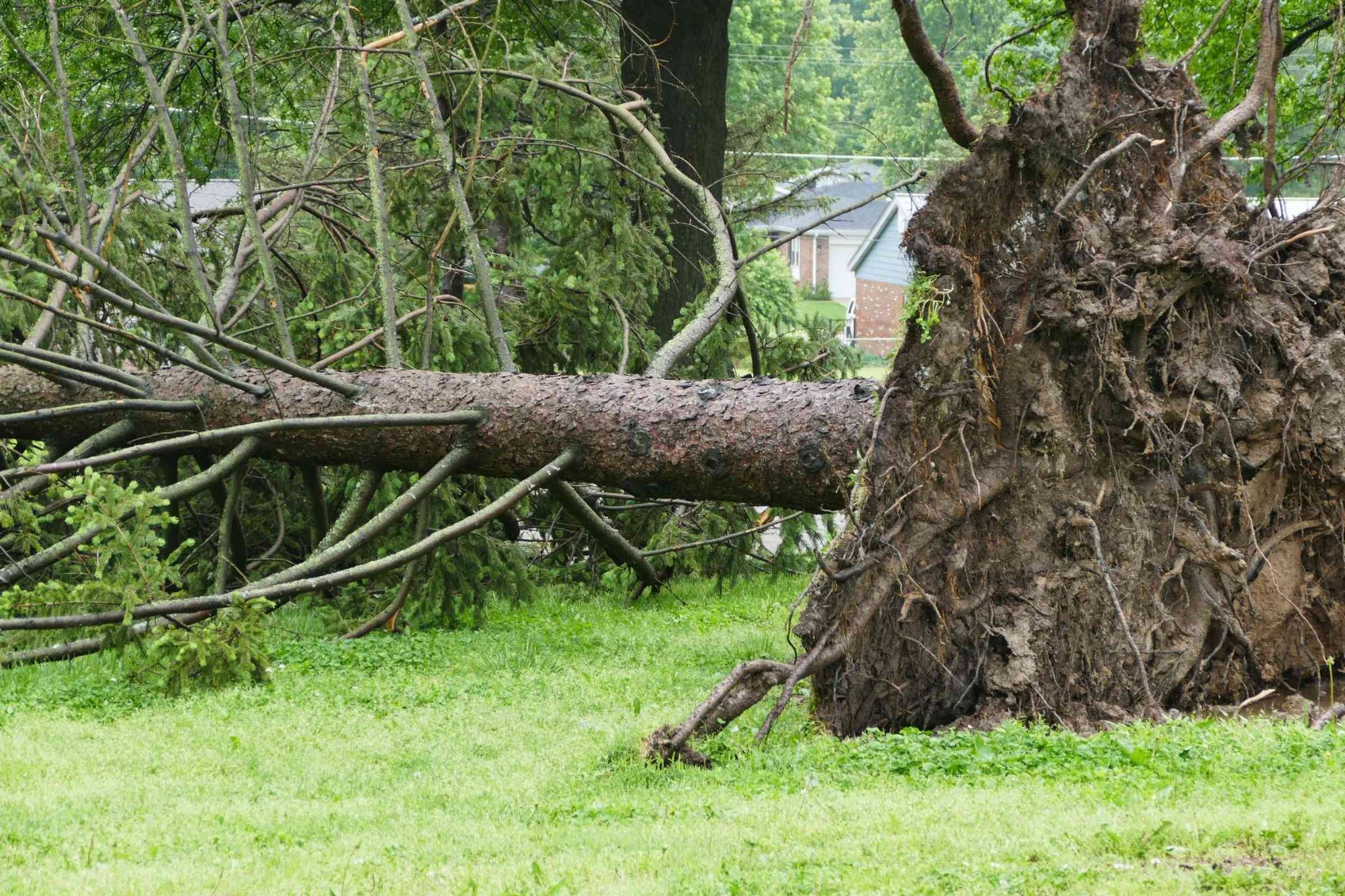
What to Do After a Storm Damages Your Trees in Pfafftown
September 3, 2026
A tree just came down in the storm. Here's what to do in the first hour, how to spot immediate danger, and when to call Godspeed's ISA arborists in Pfafftown.
If a storm has brought down a tree or left large limbs hanging over your property, don’t assume the danger ended when the weather cleared. Broken branches can fall without warning, damaged trunks can continue to split, and trees that have shifted in saturated soil may be less stable than they appear.
What you do next depends on what was damaged and where the tree landed. A limb across the yard is a very different situation from a tree tangled in power lines, leaning toward your home, or resting on the roof. Before you start cutting or clearing debris, you need to determine whether the area is safe, how serious the damage is, and who should handle it. Here’s where to start after a storm damages a tree on your Pfafftown or Lewisville property.
Key Takeaways
- Stay away from any downed line and let the utility company handle wires and tree damage near power lines.
- Large hanging limbs, a split or broken trunk, root heave, and a new or worsening lean are all signs a tree needs a professional look before you approach it.
- Get to safety first, then document the damage and contact your insurer as soon as practical. Don’t delay emergency tree work that’s needed to address an immediate hazard.
- Godspeed’s ISA Certified Arborists evaluate every tree on site before any cutting or cabling begins.
What Should You Do in the First Hour After Storm Tree Damage?
Your first priority is staying clear of the tree and anything it’s touching until you’ve confirmed the area is safe.
Stay Away From Utility Hazards
Before you get close enough to inspect the tree, check whether it has fallen into or near any utility lines. Storm-damaged trees can bring down electrical lines or leave them tangled in branches, and the danger isn’t always obvious from the ground.
- Treat every wire near the tree as a hazard, including power lines, telephone lines, cable lines, and even fences a downed line is touching.
- Leave downed lines and any tree damage around power lines to the utility company. This is a job for trained utility crews, not homeowners or tree crews, until the power company confirms the line is de-energized.
- Call 911 for immediate hazards such as fire, injury, or an active life-safety emergency; otherwise, contact the utility.
- If you smell gas, leave the house immediately and contact the gas company or fire department from a safe distance.
Document Before You Touch Anything
Photograph the damage from a safe distance before any cleanup starts. Wide shots of the tree, close-ups of the break point, and anything the tree damaged all matter later, and it’s much easier to get these photos now than after the debris has been moved.
Resist the urge to start dragging limbs or clearing branches yourself right away. Damaged branches may be supporting one another or holding stored tension, and cutting or moving one can cause another part of the tree to shift or fall unexpectedly. Wait until the tree has been assessed before disturbing anything that could still be unstable.
When to Call 911 vs. the Utility Company
Call 911 if there’s fire, injury, entrapment, or another immediate life-safety threat, such as a downed line actively arcing or sparking, or if a fallen tree or limb prevents you from safely leaving the house.
A downed line by itself, with no fire, injury, or entrapment, is generally a utility issue rather than a 911 emergency. Report it to your utility company and stay away from it.
For storm damage that needs a professional but isn’t a life-safety emergency, Godspeed’s 24-hour emergency tree service is the next call.
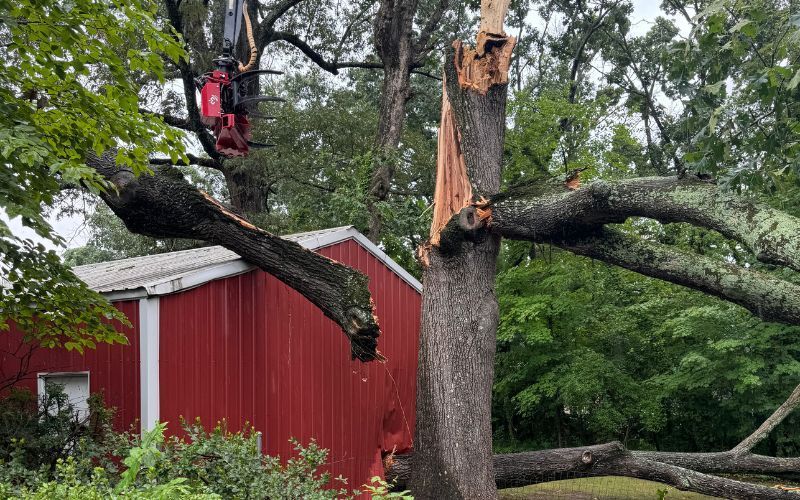
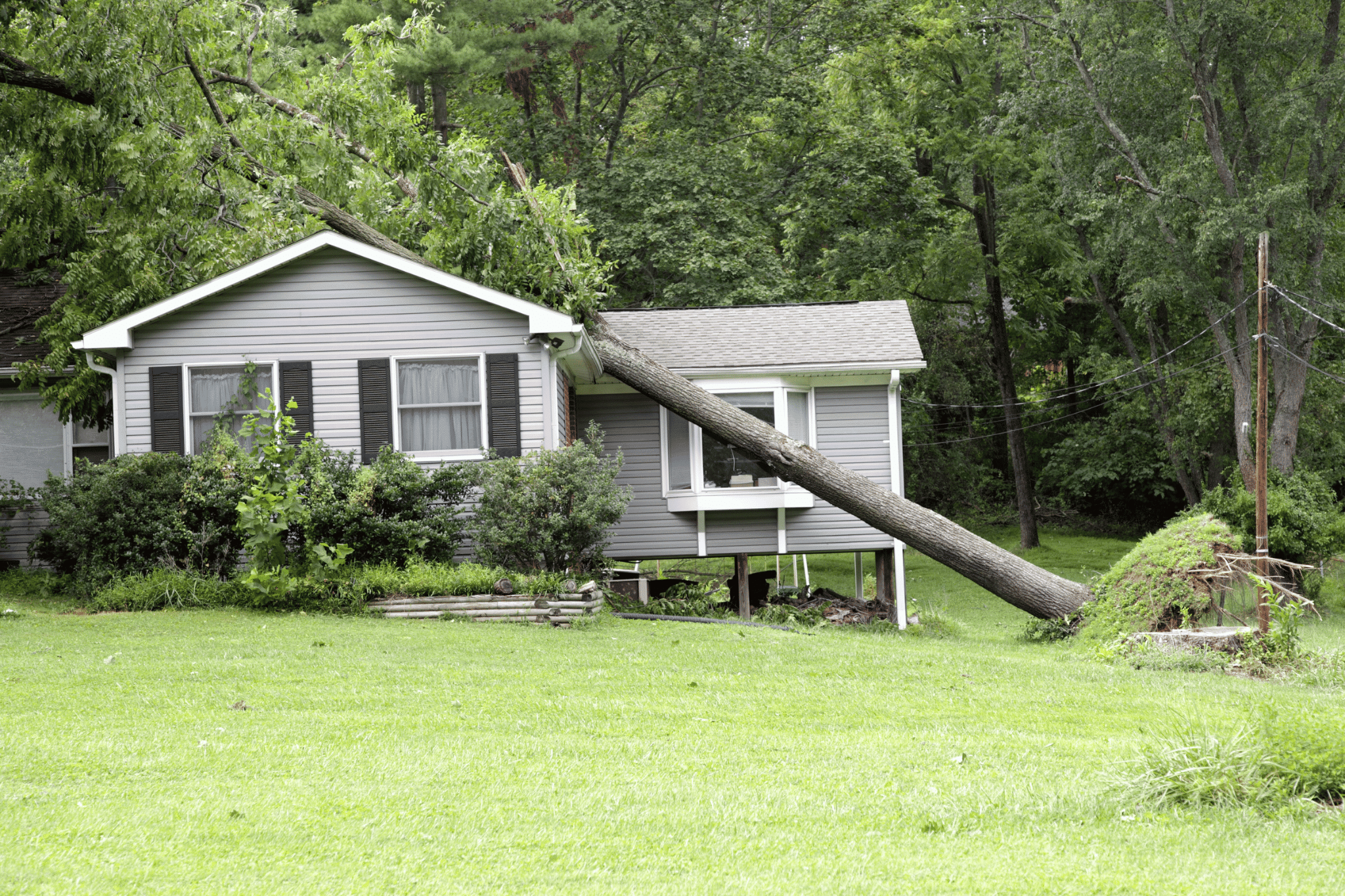
Severe trunk splitting can leave large sections of a tree unstable, requiring controlled removal to protect nearby structures.
How Do You Know If a Storm-Damaged Tree Is Immediately Dangerous?
Once you and your family are safe, the next question is whether the tree itself still poses a risk. Watch for these signs from a safe distance:
- A large broken branch or split section of the trunk that’s still partially attached and hanging overhead. A limb under tension can fail with no warning, making it the top-priority hazard after a storm.
- A trunk that’s cracked or split, especially where the split is visible without approaching the tree.
- Root heave, meaning the soil on one side of the tree is lifted or cracked, which points to a root system that’s partially pulled out of the ground.
- A tree that’s partially uprooted or leaning in a way that’s new or has visibly worsened since before the storm.
What Factors Are Used to Assess a Storm-Damaged Tree?
NC State Extension’s decision guide looks at several factors together when assessing a storm-damaged shade tree, rather than any single sign on its own.
- The tree’s lean angle
- Whether the trunk is broken
- How many live limbs remain
- How much of the root system is still in the ground
A tree with a smaller lean but a broken trunk or heavy root damage can still need removal, while a tree with a larger lean but an intact trunk and root system may be a candidate to keep. Lean angle alone doesn’t decide the outcome, which is why these are best treated as assessment factors for an arborist rather than a homeowner decision rule.
Should You Call Your Insurance Company or a Tree Service First?
Once the immediate danger has passed, who you call first depends on whether the tree damaged your home or other insured property. If there’s property damage but the tree isn’t creating an active hazard, contact your insurance company before scheduling removal so you can confirm what documentation they need and how your policy handles the claim.
If the tree is still creating an immediate risk, the tree service may need to come first. A tree resting on your home, blocking your only exit, or at risk of causing additional damage may need to be stabilized or removed before you can wait for the claims process.
Coverage and claim requirements vary by policy, so keep the photos you’ve taken and contact your insurer as soon as practical.
When the Situation Can’t Wait for a Claims Call
If waiting could put people or property at greater risk, don’t delay emergency tree work while you wait to hear back from your insurer. Godspeed’s emergency tree service can address the immediate tree hazard, while you document the work and contact your insurer as soon as practical afterward.
What Happens When Godspeed’s Crew Arrives for Emergency Storm Response?
Emergency storm response starts with evaluating the damage and determining the safest way to address it. The crew considers the tree’s condition, what it’s resting on or threatening, and the access available on the property before deciding how to proceed.
ISA Certified Arborist Assessment First
Our ISA Certified Arborist evaluates the tree before any cutting starts. That assessment matters because ground-level judgment can miss internal defects a trained eye catches, whether the outcome is removal or keeping the tree.
Equipment Matched to the Situation
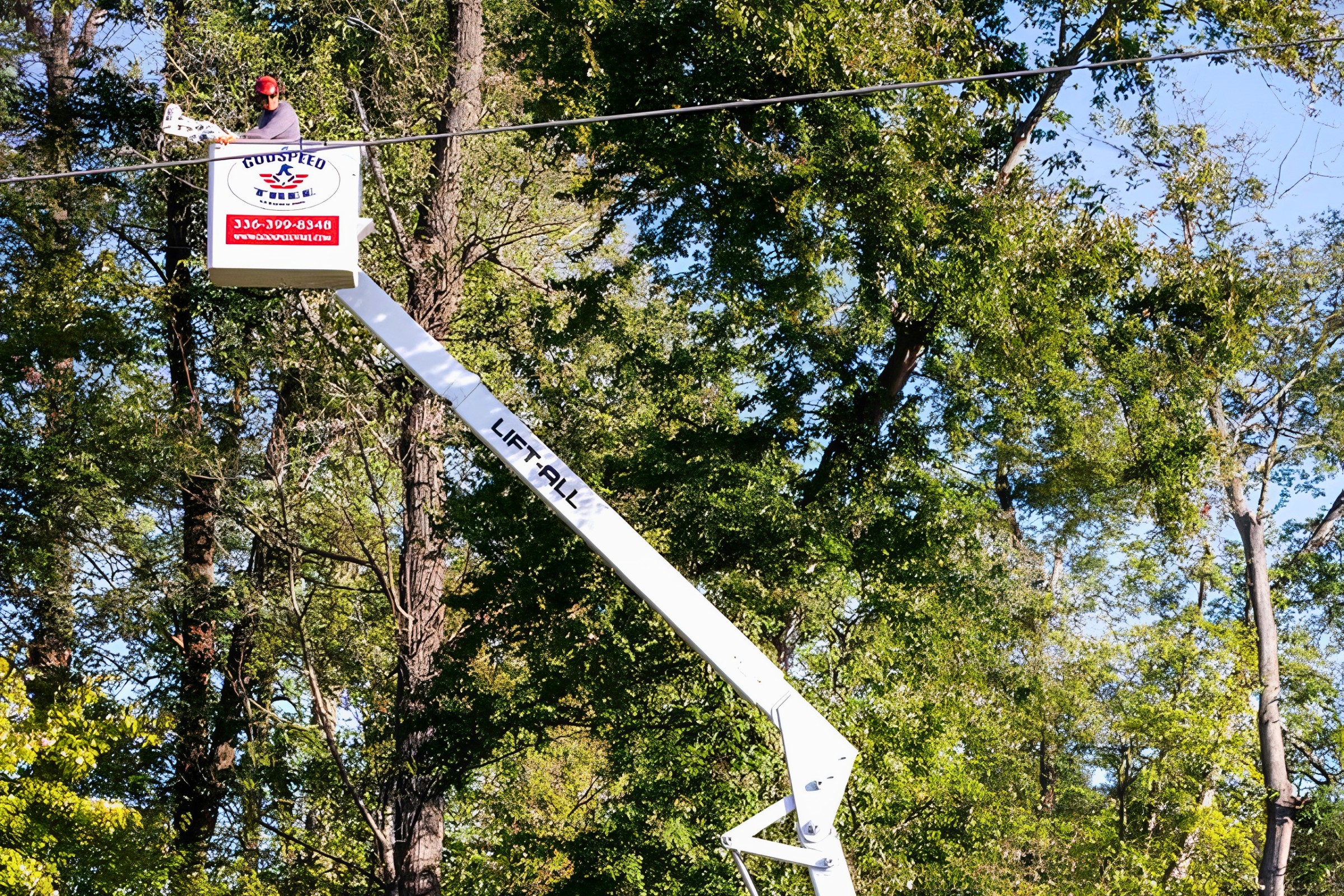
For trees down on the house, in tight yards, or close to power lines, Godspeed’s remote-controlled TreeMek crane removes the need to put a climber in an unstable tree. It also reduces the risk of additional damage to your roof, fence, or landscaping during a complex or access-constrained removal, which matters when the storm has already done enough damage.
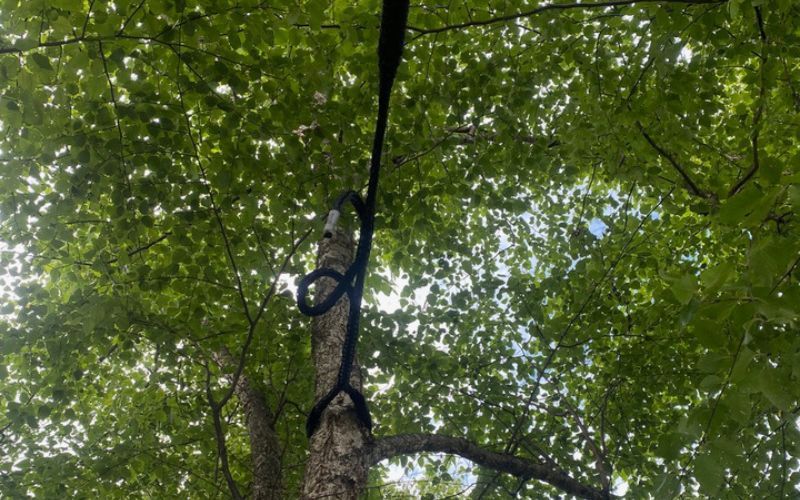
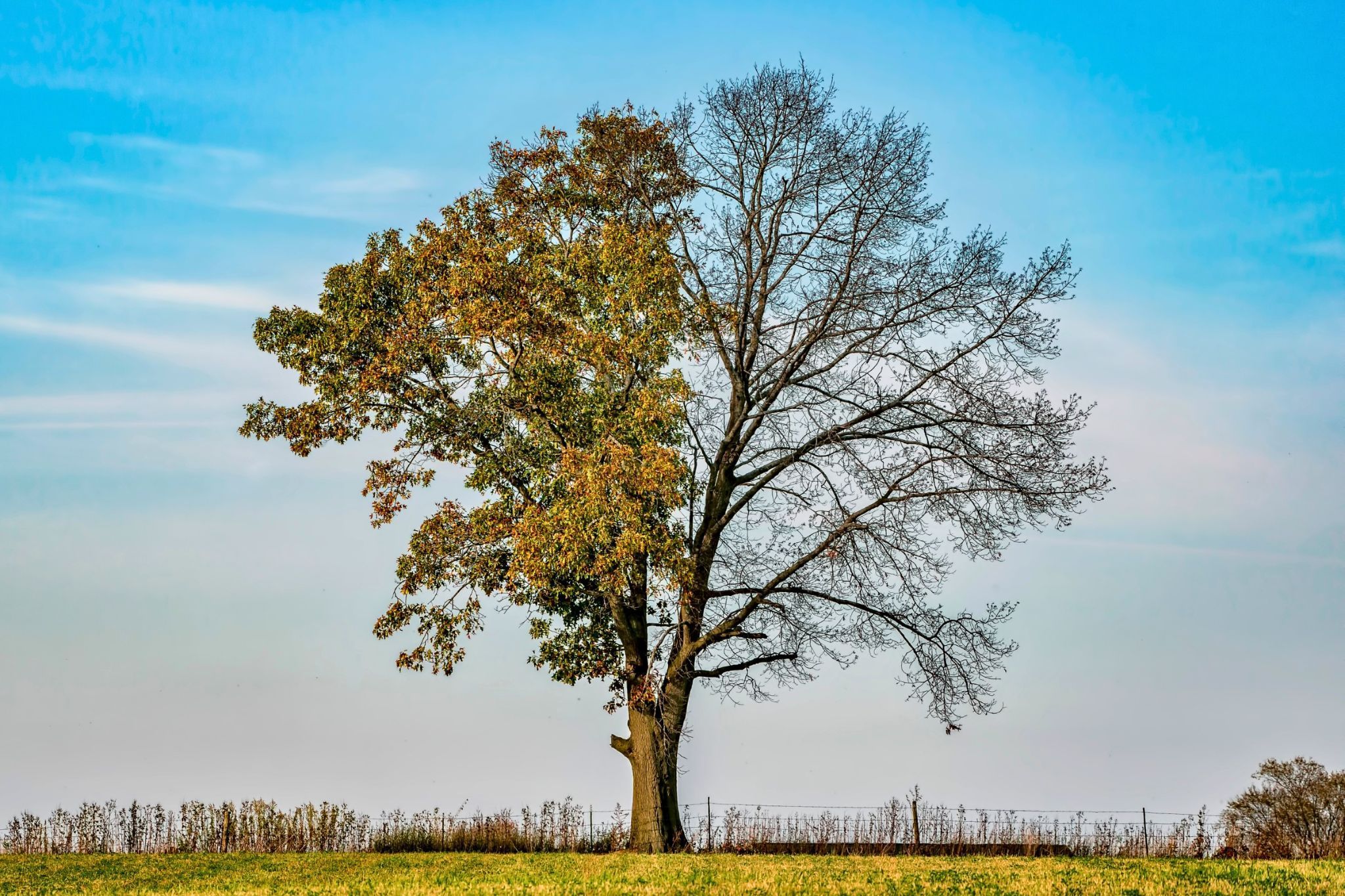
Not every storm-damaged tree needs to be removed. Cabling may provide additional support when an arborist determines the tree can safely remain.
Does a Storm-Damaged Tree Have to Be Removed?
Not necessarily. Storm damage doesn’t automatically mean a tree has to come down. Once the immediate hazards have been addressed, an arborist can evaluate the trunk, root system, canopy, and extent of the damage to determine whether removal is necessary.
If the tree is still structurally sound but has a weakness that developed or worsened during the storm, support may be an option. Godspeed offers Cobra cabling to support certain weak limbs or split trunks without drilling into the tree. Whether cabling or another approach is appropriate depends on the type and severity of the damage.
Frequently Asked Questions About Storm Damage Cleanup
Should I try to move a fallen branch off my roof or car myself?
No. Even a branch that looks manageable can be under tension or hiding damage to the surface underneath it, and moving it without training risks injury or worsening the damage. Leave it in place and call a professional for assessment.
Does Godspeed haul away storm debris after the tree work is done?
Debris hauling can be part of the job, but it’s worth confirming when you book the appointment since scope can vary by situation. Once the immediate hazard is handled, storm cleanup is a natural next step for restoring the property.
What should I ask my insurance agent about tree damage coverage?
Ask specifically whether removal, structure repair, and debris cleanup are each covered as separate line items. Policies often treat these differently, so confirm before you assume what’s included.
How much does emergency tree removal cost after a storm?
Cost depends on the tree’s size, location, and how complex the removal is. Godspeed provides a free on-site assessment and estimate before any work begins.
Who is responsible if a neighbor’s tree falls on my property?
Responsibility can depend on factors like the tree’s condition before the storm and local ordinances. Don’t assume; confirm with your insurer or a local attorney before agreeing to any cost-sharing.
Does insurance ever cover Cobra cabling after a storm?
It depends on the policy and the reason cabling is being recommended. Since coverage varies so much by carrier, ask your agent directly rather than assuming either way.
Get Help with a Storm-Damaged Tree in Pfafftown
A tree down after a storm feels urgent because it is. Stay clear of hazards, document the damage, and let an ISA Certified Arborist determine what the tree actually needs. Cracked trunks, damaged roots, and branches under tension aren’t always obvious from a safe viewing distance, which is why a professional assessment matters before cleanup begins.
Godspeed’s Certified Arborists provide 24-hour emergency response throughout Pfafftown, Lewisville, Clemmons, and Forsyth County. If you need help now, call 336-448-3088 to request emergency tree service. Once the immediate hazard is handled, see our storm damage assessment guide for next steps, or use our storm season preparedness guide to get ahead of the next storm.
Godspeed Tree Service
Owned and operated with high standards and consistent reliability by Bobby Gates, Godspeed Tree Service has earned the trust of the North Carolina Triad community over the course of more than 25 years in business. With a strong emphasis on safety, conscientious training, and accommodating the needs of each client, you can't go wrong by hiring Godspeed for any of your tree service needs!