How a Tree Hazard Assessment Helps Identify Dangerous Trees
May 20, 2026
Not every questionable tree needs removal. Learn how hazard assessments help Winston-Salem homeowners evaluate tree risk before storms cause damage.
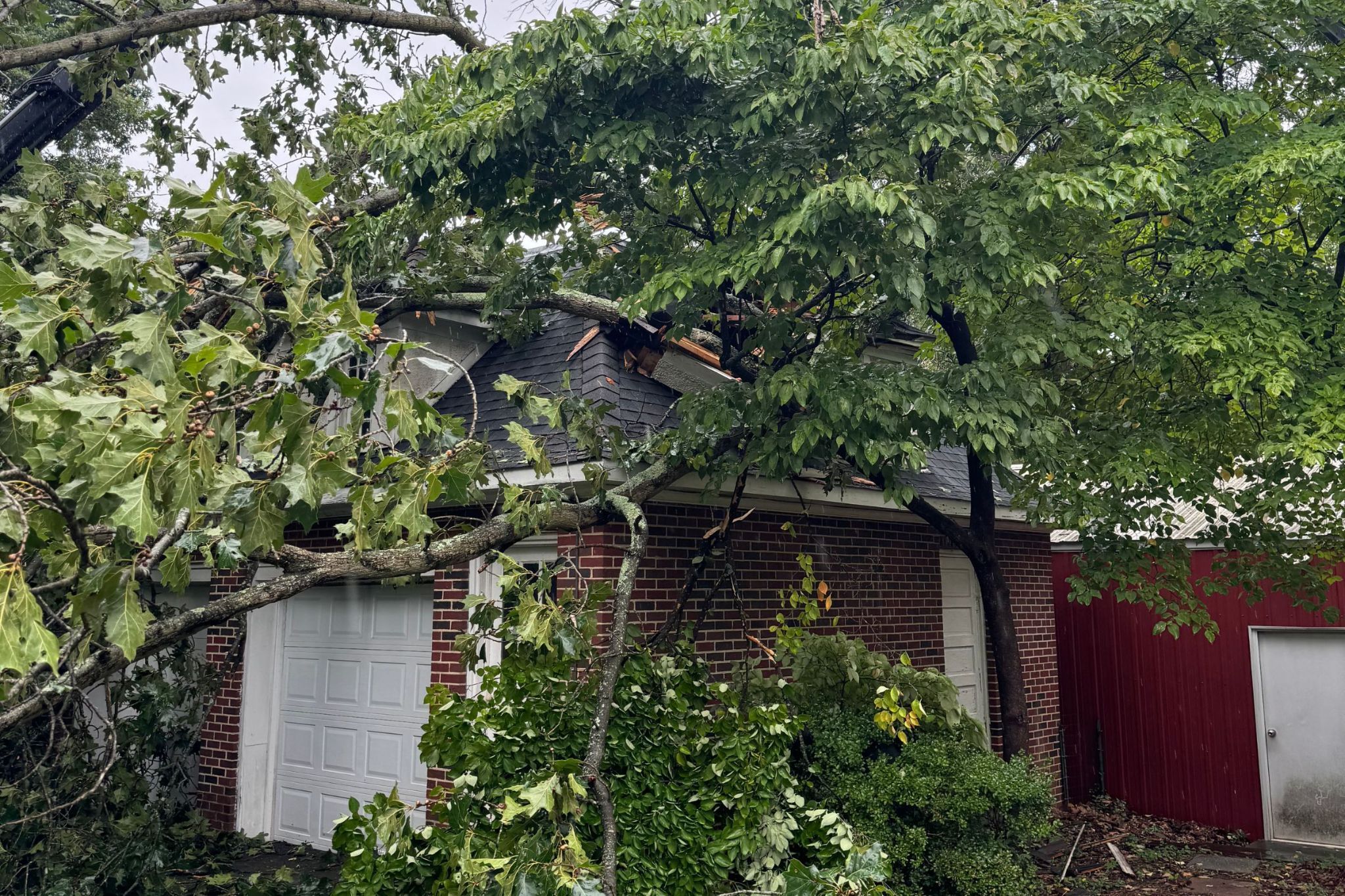
When storms blow through the Triad, some pass quietly. Others knock out power, send branches through fences, and occasionally bring down trees homeowners had no reason to suspect were a problem — including 90-foot-tall pines.
Most homeowners can usually tell when something doesn’t seem quite right with a tree on their property. What they don’t realize is that they don’t have to just wait and see what happens in the next storm. A hazard assessment by a Certified Arborist can evaluate the level of risk, explain what’s actually going on, and help determine whether the tree should be monitored, pruned, supported, or removed.
Key Takeaways
- A hazard assessment helps homeowners understand whether a questionable tree is actually dangerous — and what can be done before it fails.
- An ISA Certified Arborist looks at the root collar, trunk, crown, and target zone to assign a risk level.
- Trees near structures should be assessed every 3–5 years and after any major storm.
- Assessment findings lead to one of four outcomes: monitor, prune, cable, or remove.
- Spring is one of the easiest times to spot developing tree problems, since a full canopy can reveal stress, dieback, imbalance, and storm damage that winter often hides.
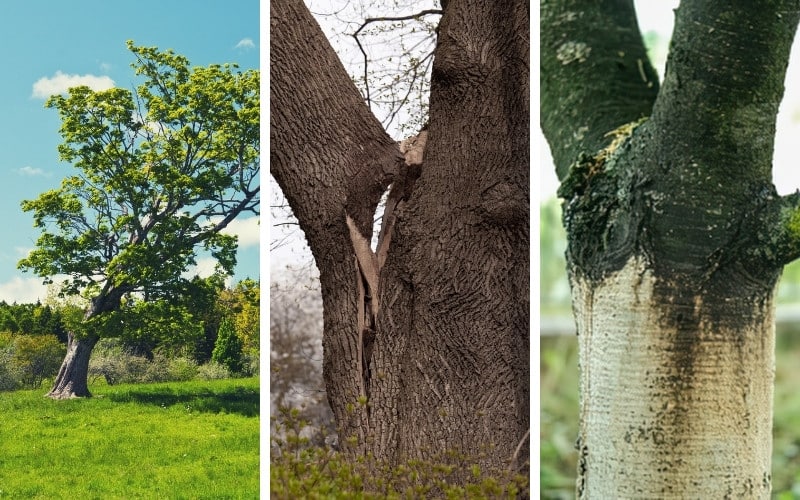
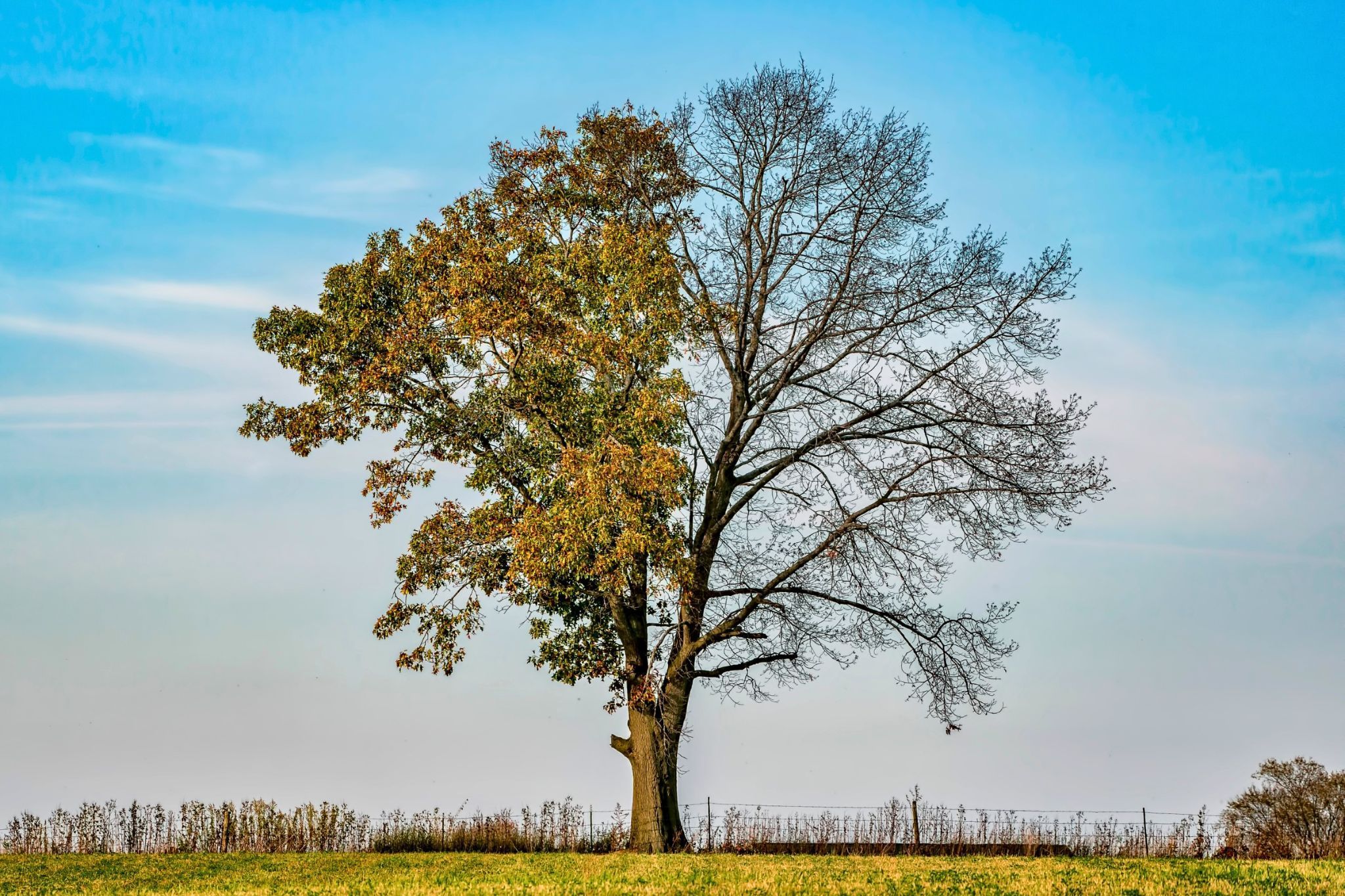
Leaning trunks, included bark, and trunk wounds are common structural defects arborists look for during a hazard assessment.
What Are the Warning Signs Your Tree Needs a Hazard Assessment?
Some warning signs are things you notice on your own — a crack that wasn’t there last year, a branch that came down for no obvious reason. Others are things you’d only catch if you knew what to look for. Either way, the point isn’t to diagnose the tree yourself. It’s to recognize when a professional is the next call you should make.
- A Lean That Has Changed: A tree that has always had a slight lean is one thing. A lean that has visibly shifted or accelerated over a single season is something else entirely — especially if it’s accompanied by soil movement at the base.
- Cracks at Branch Unions: Vertical splits or cracks where two major branches meet (co-dominant stems) are among the most common structural failure points in mature trees. These often develop slowly and can be easy to dismiss.
- Fungal Growth on the Trunk or at the Base: Mushrooms or shelf-like conks growing from the bark or root zone are a reliable indicator of internal decay. The exterior of the tree can look completely healthy while the wood inside is significantly compromised.
- Unexplained Branch Loss: If a branch has come down without a storm to explain it — or during conditions that shouldn’t have caused failure — that’s a signal worth investigating. Healthy branches don’t fall.
- Subtle Crown Asymmetry: If one side of the canopy is noticeably thinner than the other, or leafs out later in spring, it often points to a problem in the root system or trunk that’s limiting what that side of the tree can draw on.
- Abnormal Bark Patterns: Sunken areas, discolored patches, or sections where the bark has pulled away from the wood beneath can indicate wound response or dieback that isn’t otherwise visible from a distance.
- Changes After Nearby Construction: Root disturbance from grading, trenching, or compaction during construction doesn’t always show up immediately. Trees can look fine for a year or two, then begin to decline as the root damage catches up with them.
In some cases, these symptoms point to manageable issues. In others, they may indicate a tree is becoming structurally unsafe. Our guide on signs a tree should be cut down goes into more detail on what severe decline can look like.
What Does a Certified Arborist Actually Look for During a Hazard Assessment?
A professional hazard assessment is a systematic evaluation of the tree’s structural condition and surrounding environment. Rather than focusing on a single visible issue, an ISA Certified Arborist works through several parts of the tree to understand how likely failure may be — and what the consequences could be if it occurs.
Root Collar and Ground Zone
The assessment usually starts at the base of the tree, where some of the most important warning signs appear first. Arborists look for root heave, fungal growth, soil disturbance, girdling roots, and damage caused by trenching, compaction, or construction activity. Problems in the root zone can significantly reduce stability, even when the canopy still appears healthy from a distance.
Trunk Condition and Structural Integrity
Next comes the trunk evaluation. An arborist looks for cracks, cavities, seams, decay indicators, abnormal bark patterns, and old wounds that may not be sealing properly. Mature trees can sometimes have extensive internal decay with very few outward symptoms, which is why structural assessment matters more than appearance alone.
Crown Structure and Canopy Health
In the canopy, the arborist evaluates overall crown density, deadwood, branch attachment structure, and whether the tree is leafing out evenly throughout the crown. Particular attention is given to co-dominant stems with included bark, which are common failure points during storms and high winds.
The Target Zone Beneath the Tree
Hazard assessments also account for what surrounds the tree. Arborists evaluate nearby structures, driveways, sidewalks, play areas, vehicles, and utility lines to understand what could be impacted if part of the tree fails. A tree in poor condition over an empty wooded area carries a different level of risk than the same tree hanging over a home or frequently used space.
Once all four zones are evaluated, the arborist translates the findings into a risk level — low, moderate, high, or extreme — based on both how likely failure is and what’s in the way if it happens. It’s this combination that drives the recommendation, not just the tree’s condition alone.
What’s the Difference Between a Hazard Assessment and a Tree Service Estimate?
Many homeowners assume a hazard assessment and a tree service estimate are the same thing, but they serve very different purposes.
A tree service estimate is typically focused on pricing work you’ve already decided you want done. If you call a company requesting removal or pruning, the visit is often centered around the scope and cost of that specific service.
A hazard assessment starts earlier in the decision-making process. Instead of beginning with a predetermined solution, an ISA Certified Arborist evaluates the tree’s structural condition, surrounding site conditions, and likelihood of failure to determine whether any work is actually necessary — and if so, what type of work makes the most sense.
In some cases, the recommendation may be removal. In others, the tree may simply need monitoring, selective pruning, cabling, or no immediate action at all. The goal of the assessment is to evaluate risk objectively before deciding on a course of action.
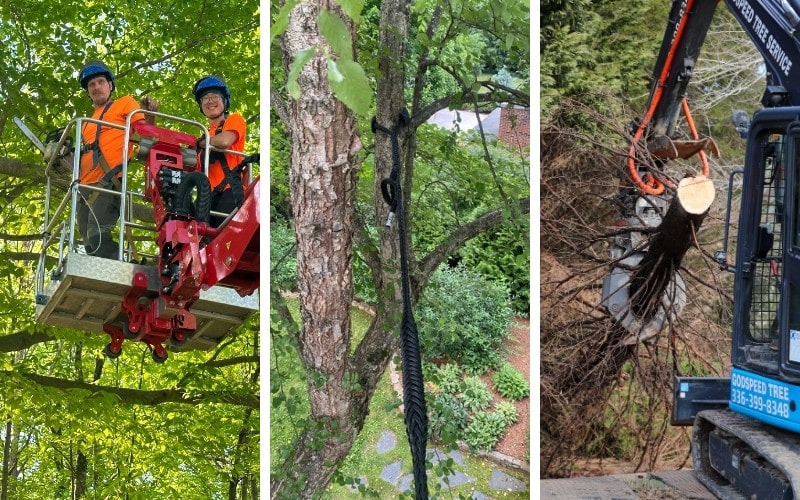
A hazard assessment doesn’t always end in removal — some trees can be monitored, pruned, or structurally supported instead.
What Happens After a Hazard Assessment?
Not every assessment ends in removal. In fact, most don’t. The arborist’s job is to find the least-invasive path to an acceptable level of risk — and that can look very different from tree to tree.
- Monitor: For trees with a low risk rating and no immediate structural concerns, the recommendation may just be to keep an eye on it. The arborist will typically suggest a reassessment timeline — often 1 to 3 years — so any changes can be caught before they become problems.
- Prune: Removing deadwood, reducing crown weight, or eliminating co-dominant leaders can meaningfully reduce a tree’s failure risk without removing it. Strategic pruning is often the right call for trees with isolated structural issues that haven’t compromised the whole tree.
- Cable: For trees with weak unions or co-dominant stems that aren’t yet a removal-level risk, structural support is sometimes the answer. Godspeed uses the Cobra cabling system — a modern, flexible alternative to traditional steel cable that provides support without drilling into the tree’s heartwood.
- Remove: When risk is rated high or extreme and no combination of pruning or cabling can bring it to an acceptable level, tree removal is the only option.
How Often Should You Have Your Trees Assessed?
For most mature trees in otherwise stable condition, arborists generally recommend a professional assessment every 3–5 years. Trees located near homes, driveways, play areas, or utility lines may warrant more frequent evaluations because the consequences of failure are higher. Trees with existing structural concerns — or trees that have already shown signs of decline — should also be monitored more closely over time.
Weather events are another reason to schedule an assessment sooner rather than later. After heavy winds, ice accumulation, or prolonged saturated soil conditions, damage is not always immediately obvious from the ground. A branch may still be attached despite developing a significant internal crack, and root movement can occur before any visible lean develops. The NC State Forestry Extension recommends evaluating trees after major storm events before assuming they are structurally unaffected.
For many Winston-Salem homeowners, spring is one of the best times to schedule a proactive assessment. Once the canopy fully leafs out, issues like uneven growth, crown thinning, deadwood, and stress response become much easier to identify than they are during dormancy.
Frequently Asked Questions About Hazard Assessments
What does a hazard assessment cost?
At Godspeed, hazard assessments are included as part of the estimate process within our service area at no additional cost. The visit includes a professional evaluation from an ISA Certified Arborist, a discussion of any structural concerns or risk factors identified, and guidance on the most appropriate next steps for the tree.
How long does a professional tree assessment take?
For a single tree, an assessment typically takes 30–60 minutes, depending on access and how complex the site is. Multi-tree properties or sites where the arborist needs to climb for a closer look will take longer. You’ll have time to walk through the findings before the visit wraps up.
Can I assess my own trees?
Homeowners can absolutely watch for the warning signs listed above — and doing so is a smart habit. But structural defects inside the trunk, root zone problems, and accurate risk rating require trained evaluation that a ground-level look from a homeowner can’t replicate. Think of it as a starting point, not a substitute.
How soon should I call for an assessment after a storm?
As soon as possible — within 1–2 days for any visible damage. Don’t approach a leaning or struck tree before a professional evaluates it. Instability after a storm isn’t always immediately apparent, and what looks stable from 20 feet away can be something else entirely up close.
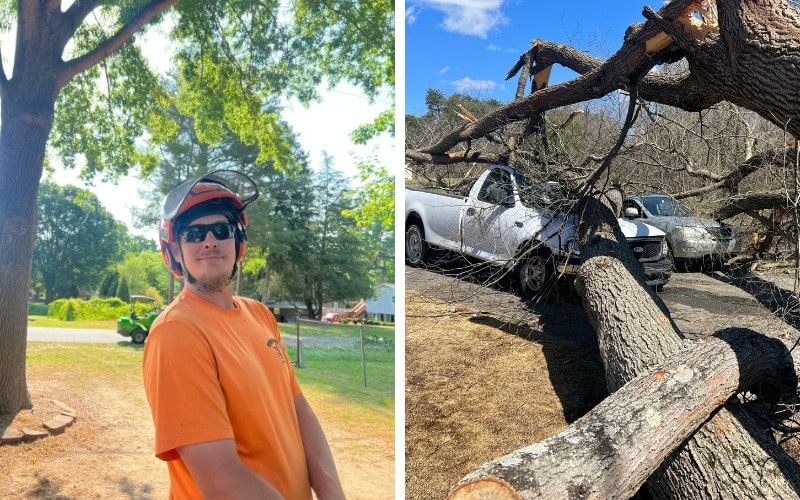
When You’re Unsure About a Tree, Start with an Assessment from Godspeed
Most homeowners can tell when a tree doesn’t seem quite right anymore. Maybe it’s a lean that looks worse than it used to, dead limbs showing up in the canopy, cracks after a storm, or a tree that just feels different than it did a few years ago. That doesn’t always mean removal is the answer. Often, the next step is understanding the level of risk and what — if anything — should be done before the next storm rolls through.
At Godspeed Tree Service, hazard assessments are led by ISA Certified Arborists and focus on giving homeowners a clear understanding of the tree’s condition, risk level, and management options. If there’s a tree on your property you’ve been quietly wondering about, you can schedule an assessment with Godspeed online or call us now at 336-448-4621.
Godspeed Tree Service
Owned and operated with high standards and consistent reliability by Bobby Gates, Godspeed Tree Service has earned the trust of the North Carolina Triad community over the course of more than 25 years in business. With a strong emphasis on safety, conscientious training, and accommodating the needs of each client, you can't go wrong by hiring Godspeed for any of your tree service needs!